It still hasn’t really sunk in.
I’m home now. The bags are still somewhere near the door, my personal MacBook is dead, the washing machine is on, and yet my head is still on the dock in Oman. I can still hear the UHF radios, feel the sand in my shoes, see the floodlights on the boat park at stupid o’clock in the morning.
The first ever World Sailing Inclusion Championships are over.
And I’m still trying to process what, exactly, we just did.
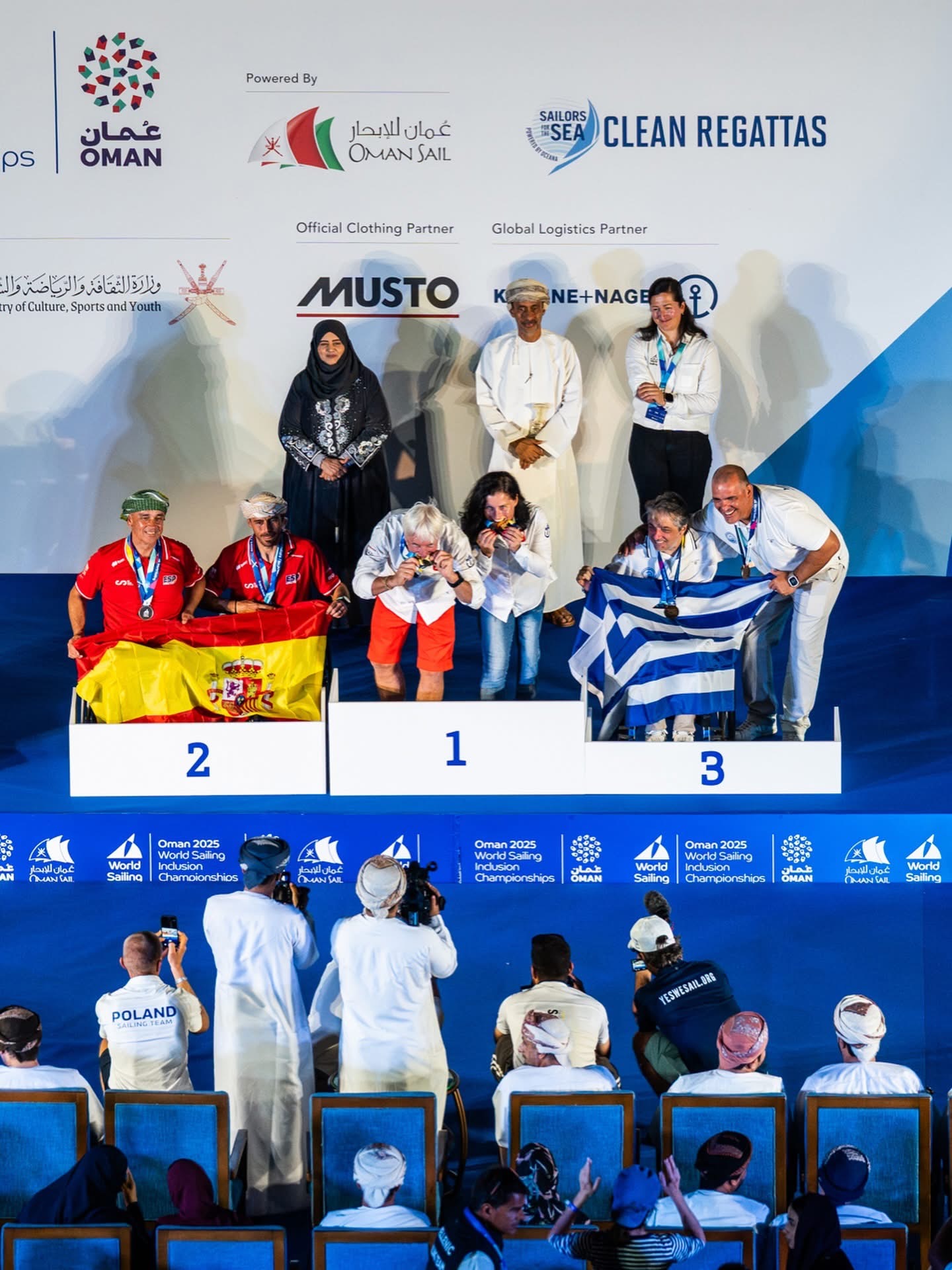
This started with a vision that, for a long time, lived almost entirely in my own head. Not in a room full of supporters. Not backed by endless resources. Not universally welcomed. Just a stubborn, immovable belief that Para Inclusive sailing deserved better than being treated as a side project. That it deserved a true world championship. That our sailors deserved a proper stage – not borrowed space, not compromise, not “maybe one day”.
There were plenty of moments where I was told, directly and indirectly, that the idea was unrealistic, too ambitious, unnecessary, or ridiculous. That I should scale it back. Make it safer. Make it smaller. Make it easier for the system to swallow.
I didn’t.
And that decision came at a price.
This event was never tidy, polished or easy. It was messy. Emotional. Relentless. Boats broke. People dropped out. Logistics imploded. Plans changed hourly. There were more moments than I can count where the sensible thing would have been to compromise or retreat.
We didn’t.
We leaned into the chaos with head torches, floodlights and sheer bloody-minded stubbornness. We fixed what we could, improvised what we couldn’t, and kept coming back to one question: what do the sailors need from us right now? That became the compass. Every time things went sideways and they did, repeatedly, we followed it.
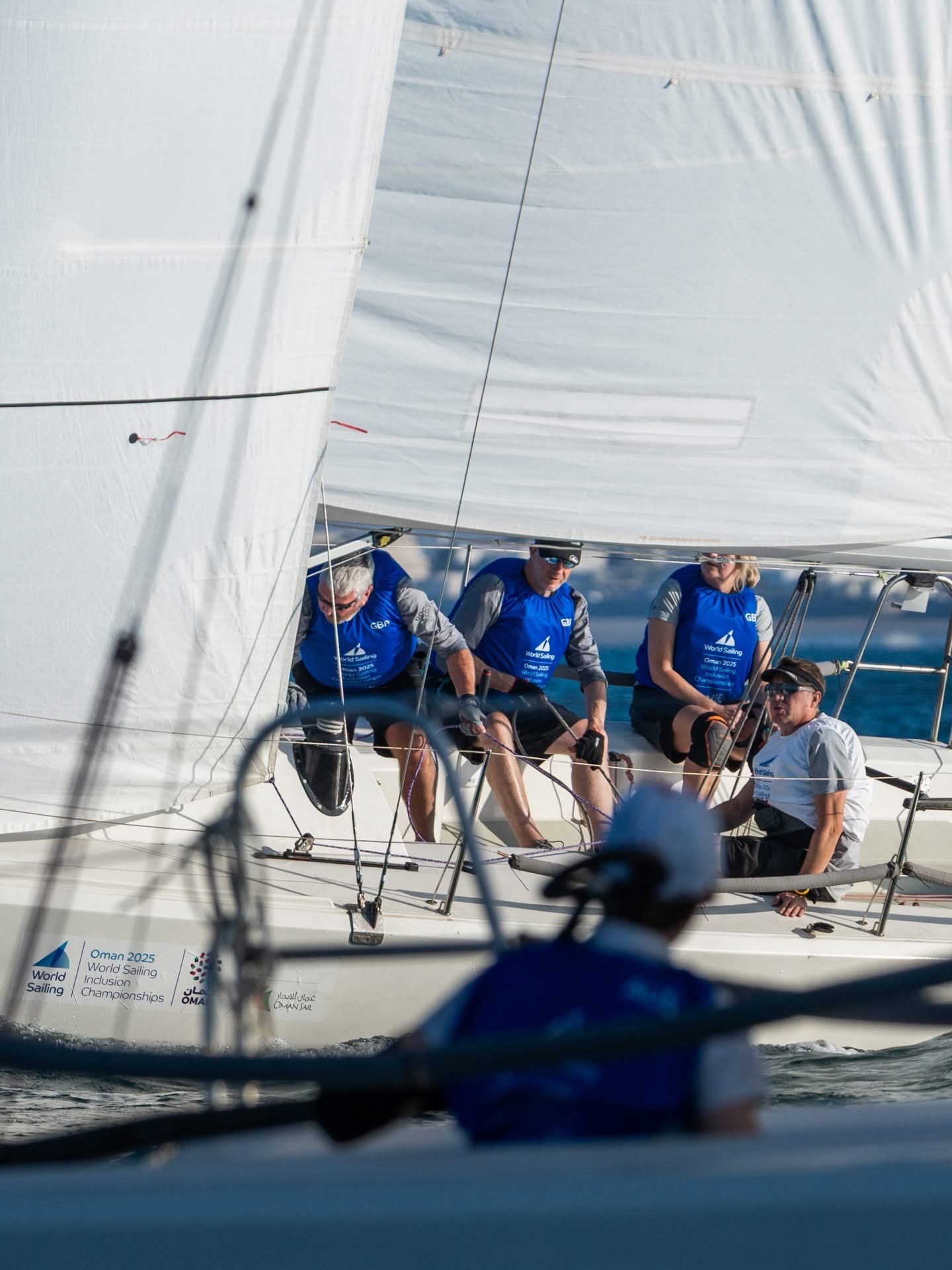
On paper, the World Sailing Inclusion Championships were just a concept. One event. Multiple classes. Multiple impairment groups. Real racing. Real pressure. Real stakes. Not a showcase. Not a participation tick-box. A championship. It looked ambitious on paper. Some days it looked impossible.
And then, in Oman, it was suddenly very, very real.
It looked like sailors from all over the world rolling into the boat park; some seasoned, some at their first major international regatta, all there for one reason: to race. It looked like wheelchairs, crutches, prosthetics, white canes and support workers on the same dock as high-performance race boats, coaches, umpires and race officials. No side entrance. No separate space. One sport, one environment, one standard.
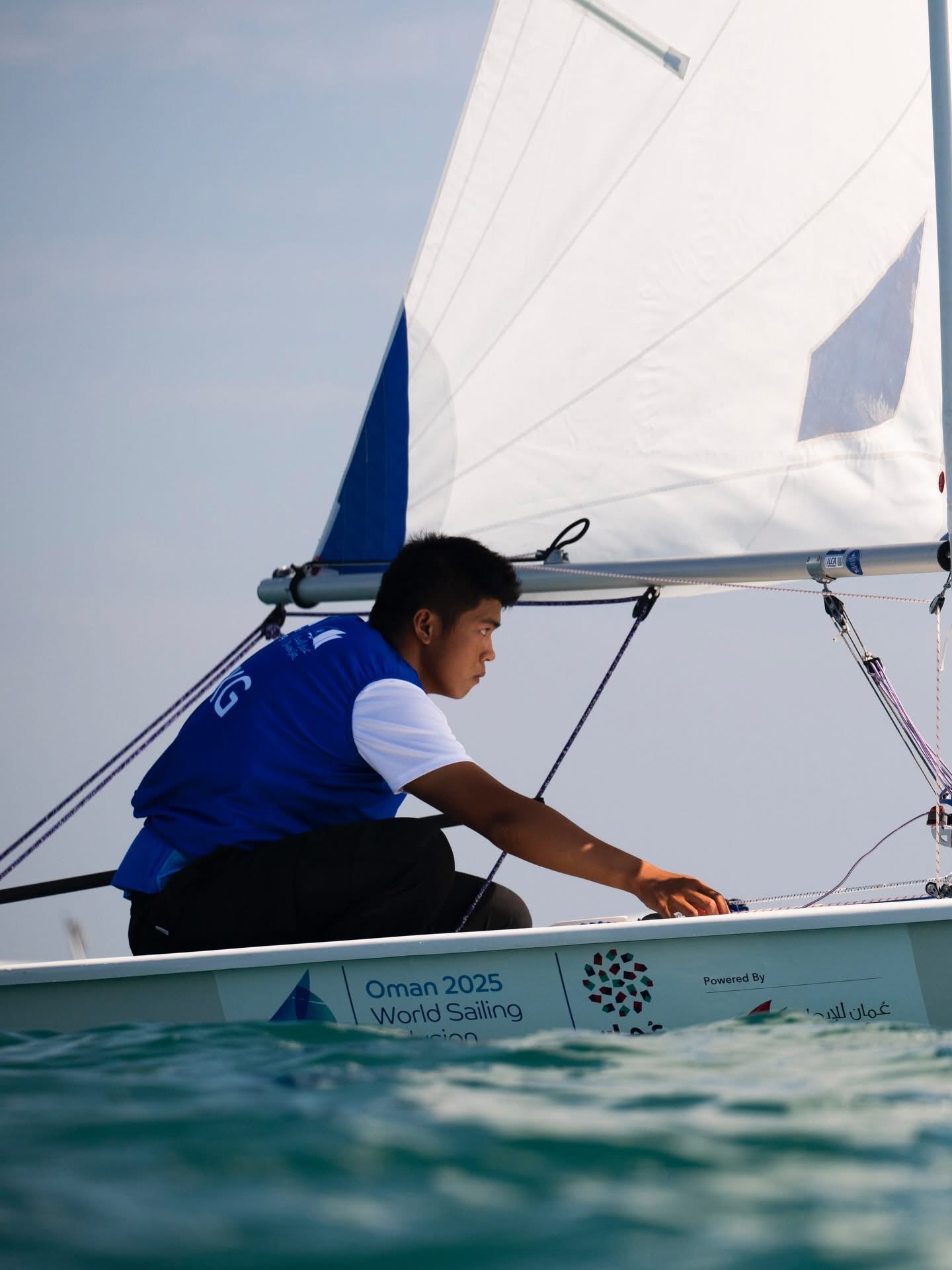
It looked like athletes learning new boats in hours and still throwing themselves into tight mark roundings. Visually impaired sailors trusting guides in situations most people will never fully understand. Intellectual impairment sailors managing sensory overload, nerves and fatigue – and still showing up every single day ready to compete. Coaches adapting on the fly. Officials relearning what fairness looks like in real time. Volunteers holding everything together quietly in the background.
It wasn’t perfect.
But it was completely real.
Whether people acknowledged it at the time or not, this event sat in the shadow of something much bigger: the fight to get sailing back into the Paralympic Games and to prove – with evidence, not words – that Para Inclusive sailing is credible, global and ready. Every launch, every start, every result is now part of that story.
We had to show that athletes exist in real numbers across nations and impairment groups. That there is a pathway; from first opportunities, through the Inclusive Development Programme, to world-level competition. That we can run complex, inclusive events under pressure and still hold standards of safety, fairness and performance.
Did we tick every box perfectly? No.
But we proved the model. And sometimes proving that something can exist at all is the hardest part.
I won’t pretend this didn’t take something out of me. There were days fuelled by caffeine, adrenaline and sheer refusal to fail. There were 02:30 finishes followed by 06:00 starts. There were quiet moments alone in rooms staring at laptops, wondering if the whole thing was about to fall apart – and whether I was carrying too much of it on my own shoulders.
But there were also the moments that made it all worth it. The sailor who said this was the first time they truly felt like a “real athlete”. The emerging nation teams who fought just to get to the start line. The coaches who said, “We’re in. What’s next?” The thank-you’s that came quietly, clumsily, imperfectly, but honestly.
No one delivers something like the WSIC alone. And there are people I need to thank by name.
Leo – for standing shoulder to shoulder with me through the chaos, for coaching with empathy and brilliance, for adapting endlessly, and for never once flinching when things got hard. You carried more than your share and then some. I couldn’t ask for a better Emily 😉
Matt — for stepping straight into fires wherever they appeared, for bringing calm to pressure, and for backing this event with action, not just words.
Hannah2 — for keeping everyone fed, watered, functioning and vaguely human when the days blurred into nights. The glue that held so much together, as well as creating your own chandlery on the pontoon!
Simon and Moxey — for being relentlessly solid in the operational madness, for making impossible turnarounds happen, and for never letting standards slip even when the pressure was at its worst.
To Joe, Maryam and Feras and the Team at Oman Sail – you didn’t just host this event, you believed in it. Your leadership, trust, experience and refusal to let things fail made this championship possible. From strategy to boats to operations on the ground, this does not happen without you.
To the dock and shore teams – the ones lifting, fixing, towing, repairing, rigging, de-rigging – this championship was built in your hands.
And to Stoggs — thank you for holding my hand and pushing me as an Technical Delegate. For teaching without ego, guiding without control, and backing me when the pressure was at its highest. I am a better TD because of you.
The sailors trusted us. More importantly, they trusted each other. They accepted that this first edition wouldn’t be perfect, but that it would be meaningful and they showed up anyway. That trust is not something I take lightly.
So was it worth it?
Yes.
A hundred times yes.
Not because it was easy. Not because it was universally supported. Not because everyone believed in it. And certainly not because it all went to plan. But because we proved that Para Inclusive sailing can stand on its own as a world-level product – competitive, compelling, credible and here to stay.
We opened a door with this championship.
That door is not closing again.
Now my job is to turn the noise of this event into something the wider world cannot ignore – data, evidence, stories, outcomes. The IPC submission. The sports programme decision. The next edition of the WSIC. The next generation of IDPs. The futures that haven’t even been imagined yet.
We are not done.
The World Sailing Inclusion Championships were never meant to be comfortable. They were meant to challenge the system. They were meant to stretch people. They were meant to prove that the vision could live in the real world even when it made people uneasy.
There’s more to say. I’ll say it when my head catches up with my heart.
For now, here’s what I know:
We didn’t just run a regatta in Oman.
We built evidence – and we removed excuses.
Evidence that Para Inclusive sailing is global.
Evidence that the athletes are here.
Evidence that the nations are here.
Evidence that real pathways exist.
Evidence that we can deliver at scale, under pressure, at world level.
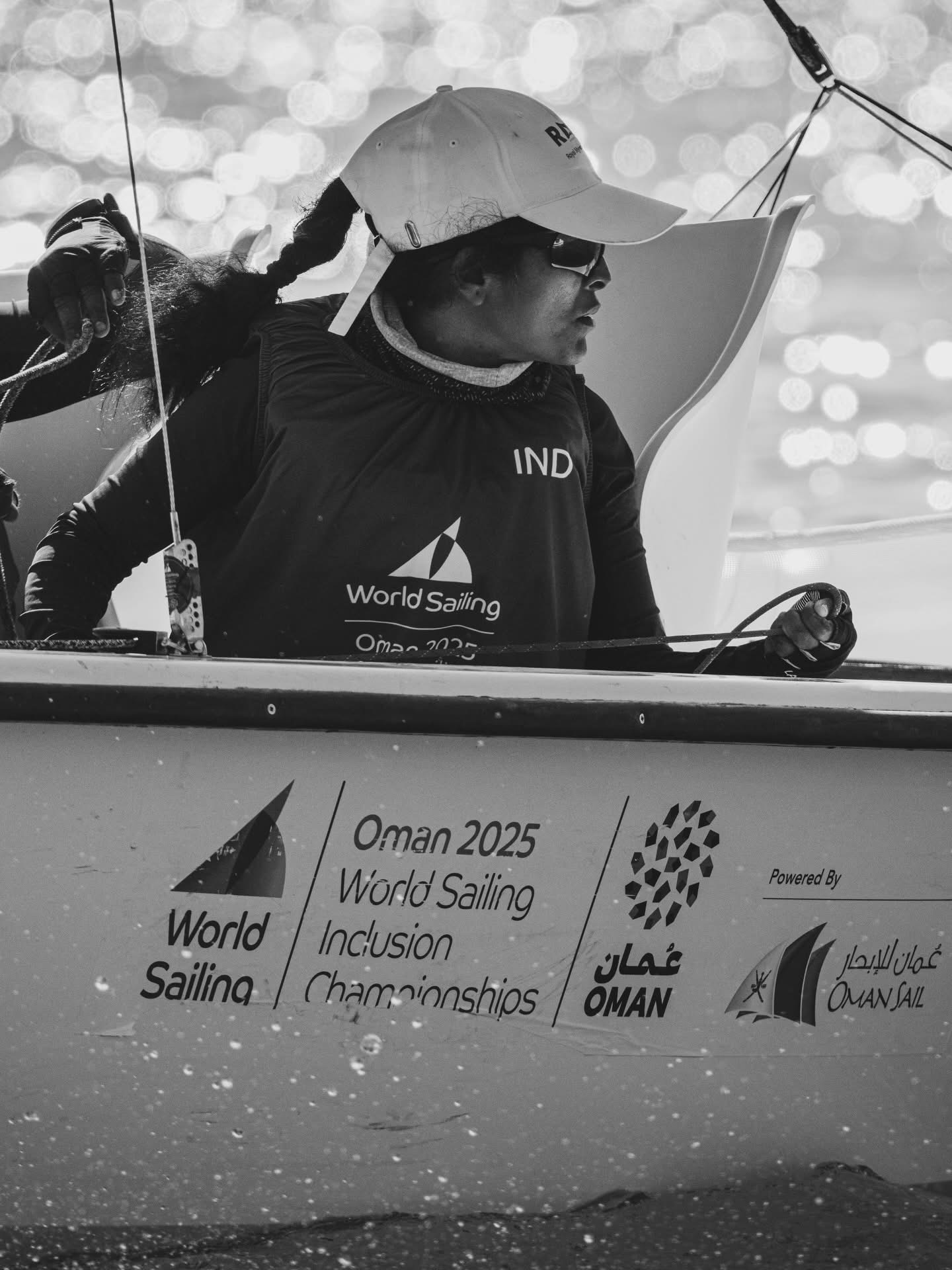
This championship now sits at the heart of the Paralympic reinstatement story – not as a concept, not as a promise, but as proof.
The question is no longer whether Para Inclusive sailing is ready.
The question is whether the World is ready to recognise it.
And we are only just getting started.


 SAILING HANNAH
Leave a comment