Every now and then, I need to remember to look up.
I am not particularly good at it.
Most days, my attention is firmly fixed on the next problem. The boat we haven’t found. The email that hasn’t been answered. The sailor who needs funding. The country we’re trying to bring into the sport. The classification rule that needs rewriting. The event that is six weeks away and still has approximately nine thousand moving parts.
There is always another fire.
And when you spend your life putting out fires, it is very easy to forget to turn around and look at what you’ve built while you were busy fighting them.
I did that recently.
And actually, we have come a bloody long way.
In 2023, I went to Singapore with Stevie Beckett (my former tactician from my Cobra sailing days) to deliver the first real edition of what would become the Inclusive Development Programme.
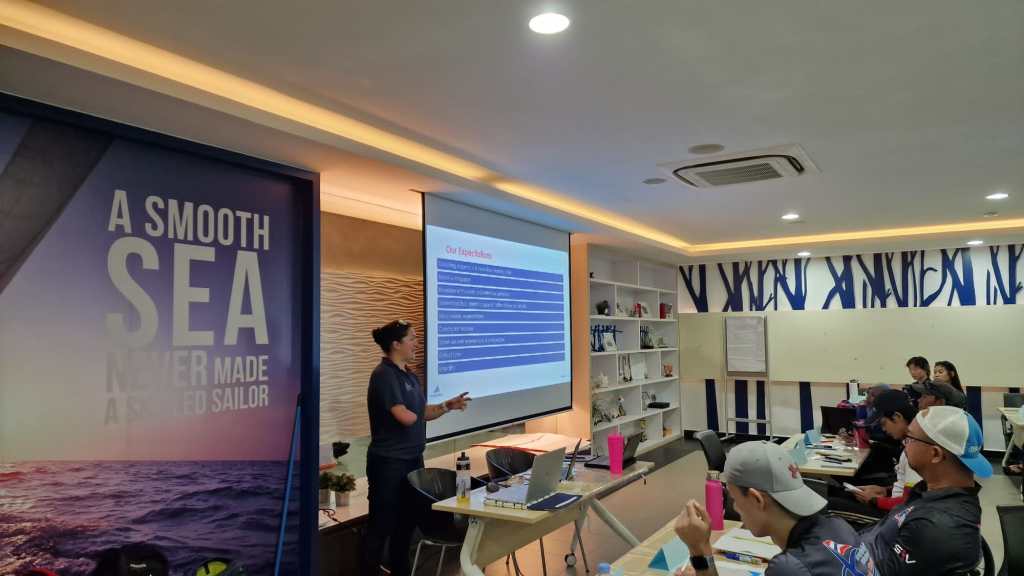
It was new. It was experimental. And I’m not entirely sure anyone else could see what I could see.
I believed that if we genuinely wanted to grow Para sailing, we had to stop thinking only about Para sailing. We needed to create opportunities for people to come through the door. We needed coaches, administrators, volunteers and sailors learning together. We needed disabled and non-disabled people sharing boats, knowledge and experiences. We needed development that didn’t just arrive, deliver a clinic, take some photographs and disappear again, but actually left something behind.
Not everyone agreed.
I remember being told that inclusion didn’t work. I remember sitting in Singapore wondering why I was there, why I was fighting so hard for something that seemed so obvious to me and apparently so difficult to explain to everyone else.
It felt, as so much of this job has at various points, like pushing water uphill with a rake.
For the record, I still don’t recommend that as a development strategy.
But Singapore was also where I met Captain Arvind. And that relationship became one of the things that reminded me why persistence matters.
We didn’t start from exactly the same place. There were discussions, challenges and questions. But Arvind listened. More importantly, he understood what we were trying to do. He saw that inclusion wasn’t about weakening Para sport or taking something away from it.
It was about making the doorway bigger.
More people through the doorway means more sailors. More coaches. More countries. More opportunities. More competition.
Once Arvind got it, he really got it. He became one of my biggest supporters.
And now, three years after Singapore, I’m about to go to India for the first time.
I am ridiculously excited about that.
We will be in Mysore delivering another IDP alongside the Eurasian Inclusive Cup – an event Arvind believed in and helped bring to life. This time, heartbreakingly, he won’t be there to see it.
There is something very special about carrying on something for someone who believed in you. I wish he could see what has happened since those conversations in Singapore. I wish I could show him where the idea went.
In a way, I suppose going to India is exactly that.
We kept going.
And India doesn’t exist in isolation.
A few weeks ago, we were in Antigua.
Twenty-three people from ten countries came together for another IDP. Different backgrounds, different levels of experience, different ambitions, all sharing the same space and learning from one another.
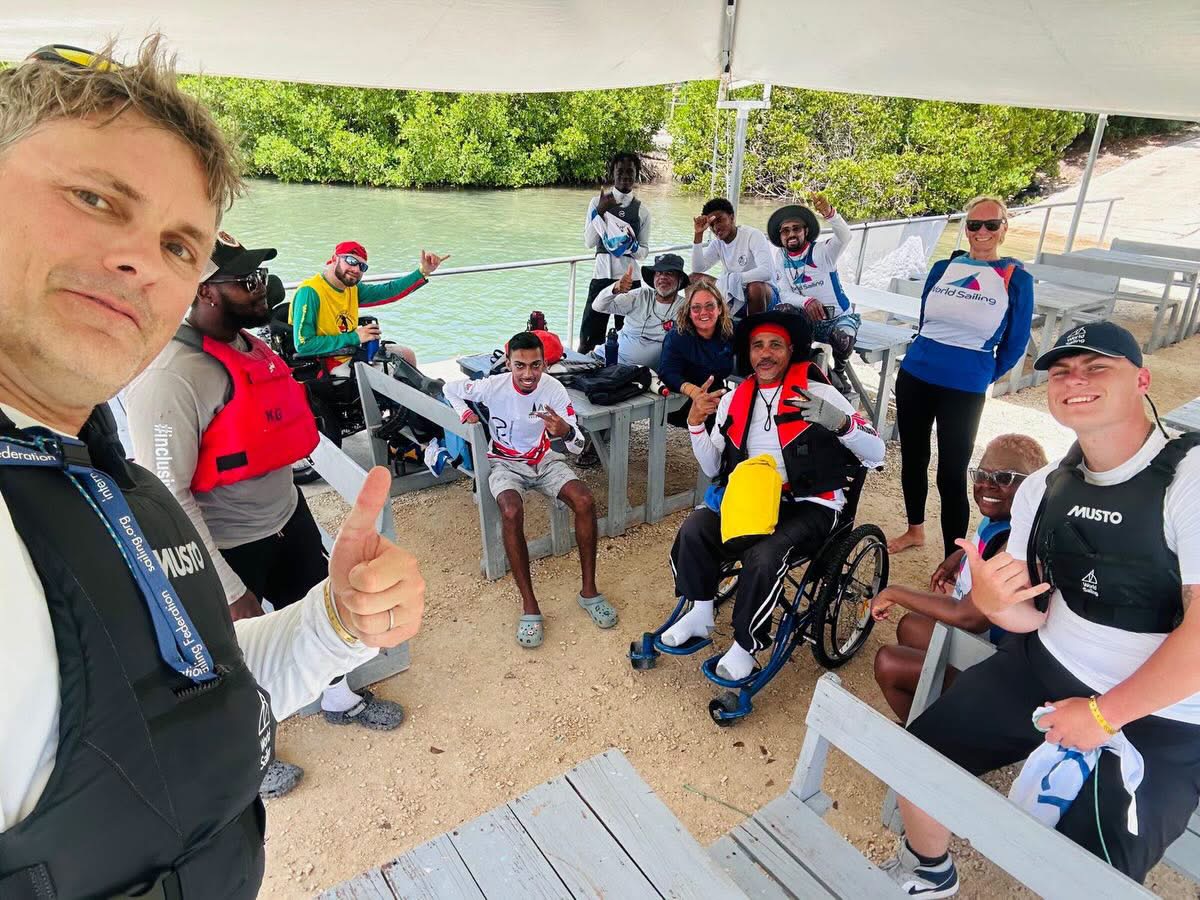
That’s the bit I love.
The IDP isn’t really about presentations or certificates or beautifully written strategies. It’s people standing around boats figuring things out. It’s getting your hands dirty. It’s coaches sharing knowledge. It’s someone trying something for the first time. It’s conversations over lunch that turn into ideas somebody takes home and actually does something with.
It is messy, practical, human development.
Singapore to Antigua. Antigua to India.
And every time we do it, the idea gets a little bigger.
Of course, occasionally we still manage to distract ourselves arguing about what things are called.
Because apparently even while trying to grow a sport, we can find time for an international incident over the word Eurasian.
At some point, though, you have to ask what actually matters.
The name on the event?
The geographical interpretation of a word?
Who thought of it?
Which committee owns which bit?
Or the sailor who has just been given an opportunity to compete?
I’ll take the sailor.
Every. Single. Time.
If you’ve got enough energy to argue about the name, brilliant. Come and help us rig some boats afterwards.
Which brings me neatly to Portugal.
On 1 October, the World Sailing Inclusion Championships begin in Portimão.
Six weeks.
I probably shouldn’t have written that down.
There are days at the moment when the Championships feel less like an event and more like an enormous, rapidly expanding creature that I accidentally created and am now responsible for keeping alive.
Boats. Charters. Docks. Hoists. Classifiers. Race officials. Volunteers. Containers. RIBs. Accommodation. Entries. Development. Equipment. Travel. Visas. Funding. More boats. More emails.
Always more emails.
And yes, occasionally I would quite like our wonderful hosts in Portugal to share my interpretation of the phrase “six weeks to go.”
Luis, if you’re reading this: I love you dearly. I’m sure everything is completely under control.
I’m almost convinced.
But we’ll get there. We always do.
But even amongst all of that chaos, something keeps happening that makes me stop.
Another entry arrives. Another country gets in touch. Someone offers a boat. Someone offers their time. A coach agrees to help a developing team they’ve never met. A Class finds equipment. A sailor asks whether they can race. A country that wasn’t part of our world before suddenly wants to know how it can become part of it.
And my answer, whenever humanly possible, is yes.
Because that was always the point.
When I first started imagining the World Sailing Inclusion Championships, I didn’t want to create another regatta for the people who already had everything they needed to go sailing.
I wanted to build something different.
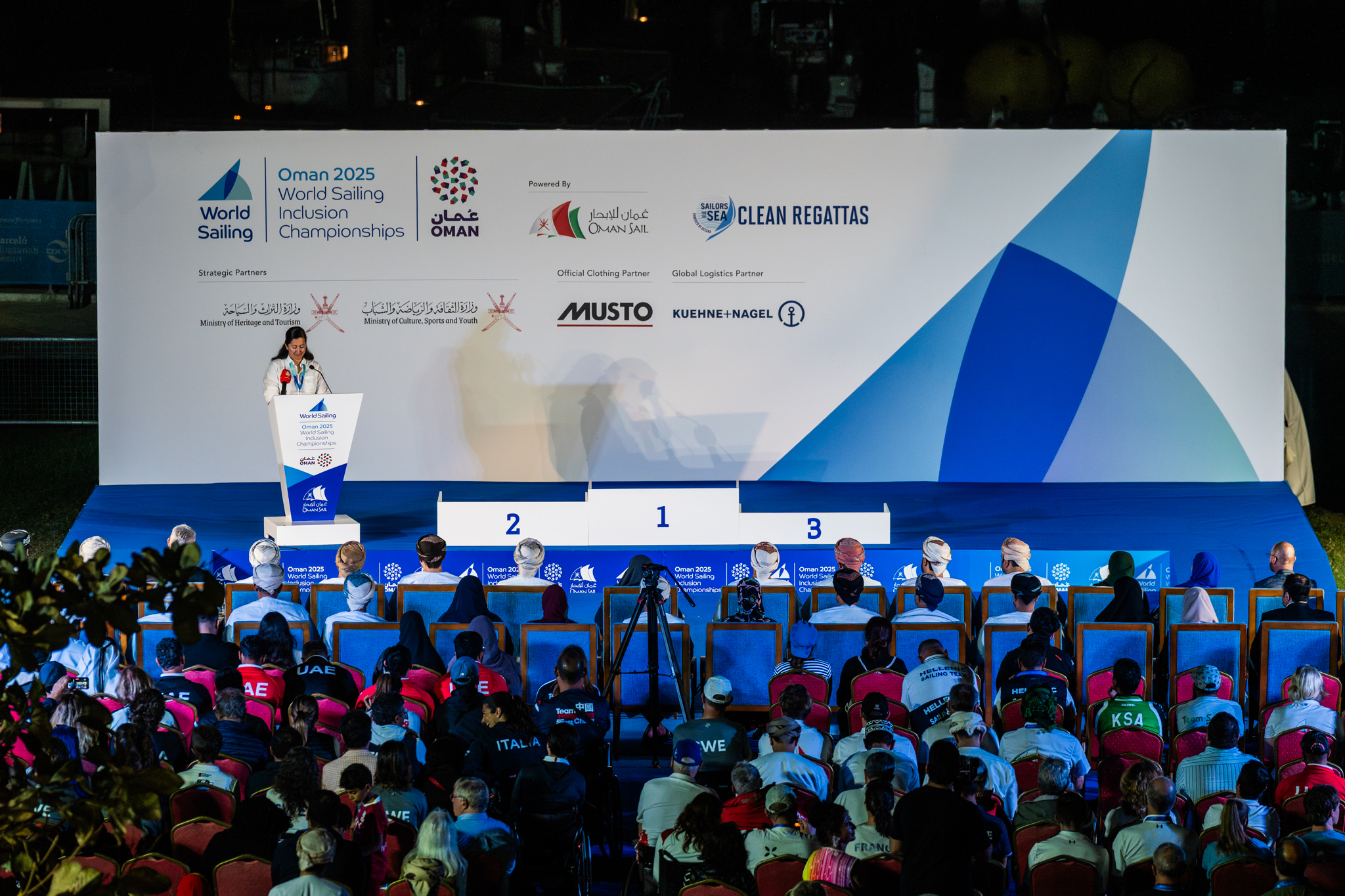
I wanted development and World Championship competition to exist in the same place. I wanted established sailing nations alongside countries taking their first steps. I wanted different impairment groups together. I wanted emerging nations to be part of the event rather than an interesting statistic at the end of it.
I wanted inclusion to mean something.
Not a logo. Not a campaign. Not a word we put in the title because it sounds good or subsequently spend six months debating whether we should put in the title at all.
Something you could actually see happening on the water.
And somehow, amongst all the fires, we’ve built it.
I don’t say that often enough.
In fact, I’m usually much better at telling myself what hasn’t been done than acknowledging what has.
There will always be something missing. There will always be another problem. There will always be another meeting. There will always be somebody telling me why something can’t be done, shouldn’t be done, needs another approval, should have a different name, belongs somewhere else or would be considerably easier if we just didn’t do it at all.
There will always be days when this feels like pushing water uphill with a rake.
But maybe that’s exactly why it’s important to stop occasionally.
Because I remember Singapore.
I remember wondering why I was there.
I remember being told inclusion didn’t work.
And now I’m packing for India to deliver another edition of a programme that started in that room.
Then I’ll come home and keep building a World Championship around the very principle I was told wouldn’t work.
That’s quite something.
And yes, I’m proud of it.
I’m proud that I built the IDP. I’m proud that I kept fighting for it when it would have been considerably easier not to. I’m proud of what the World Sailing Inclusion Championships have become. And I’m incredibly proud of the community that has taken those ideas, challenged them, improved them and made them far bigger than anything one person could ever build alone.
Sometimes saying “I built this” feels uncomfortable.
Perhaps we should get better at saying it.
I built the foundations.
Then an extraordinary group of people started building on top of them.
Stevie was there at the beginning. Arvind believed in where it could go. Since then, sailors, coaches, classifiers, volunteers, classes, Member National Authorities, families and people scattered across the world have picked up pieces of it and carried them further.
That’s how things grow.
Not because someone writes a perfect strategy.
Because enough people decide something is worth fighting for.
So perhaps this is my reminder to myself as much as anything else.
Get your head out of the fires occasionally.
Look around.
Remember Singapore.
Look at Antigua.
Go to India.
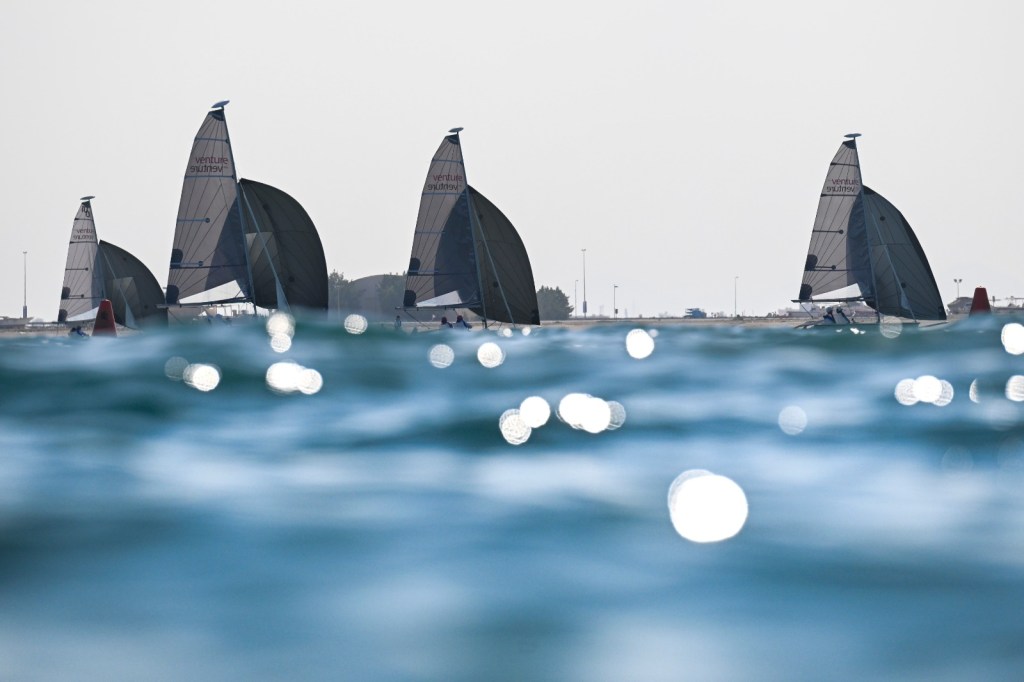
Then stand on the dock in Portugal on 1 October and take a second – just one, because I’m fairly certain somebody will immediately need a hoist, a boat, a classifier, a RIB, an accreditation or an answer to an email they sent fourteen minutes ago marked URGENT and look at what is there.
Because the fight is worth it.
The difficult conversations are worth it. The frustration is worth it. The emails are worth it. The battles that seem completely ridiculous at the time are, mostly, worth it.
Even pushing water uphill is worth it if, eventually, enough people start pushing with you.
And if I ever stop believing that, then frankly I should pack my bags, head back to Stores in Hereford and accept that my destiny lies elsewhere.
I’ve still got my FREC qualifications.
There are probably footballers who need rescuing from somewhere in the middle of the night.
I have options.
But I’m not quite ready for them yet.
Three years ago, sitting in Singapore, I was asking myself why I was there.
I don’t ask that anymore.
I know exactly why I’m here.
The sailors.
Always the sailors.
Everything else is just noise.
So let’s keep building.
Let’s get more countries through the door. Let’s find the boats. Let’s share the knowledge. Let’s stop worrying quite so much about who owns what and start asking who we can bring with us.
Let’s make Portugal something worth remembering.
And when the next fire starts, probably before I’ve finished publishing this – I’ll try to remember to look up every now and then.
Because the fight is worth it.
Look what we built.
And we’re nowhere near finished.


Leave a Reply