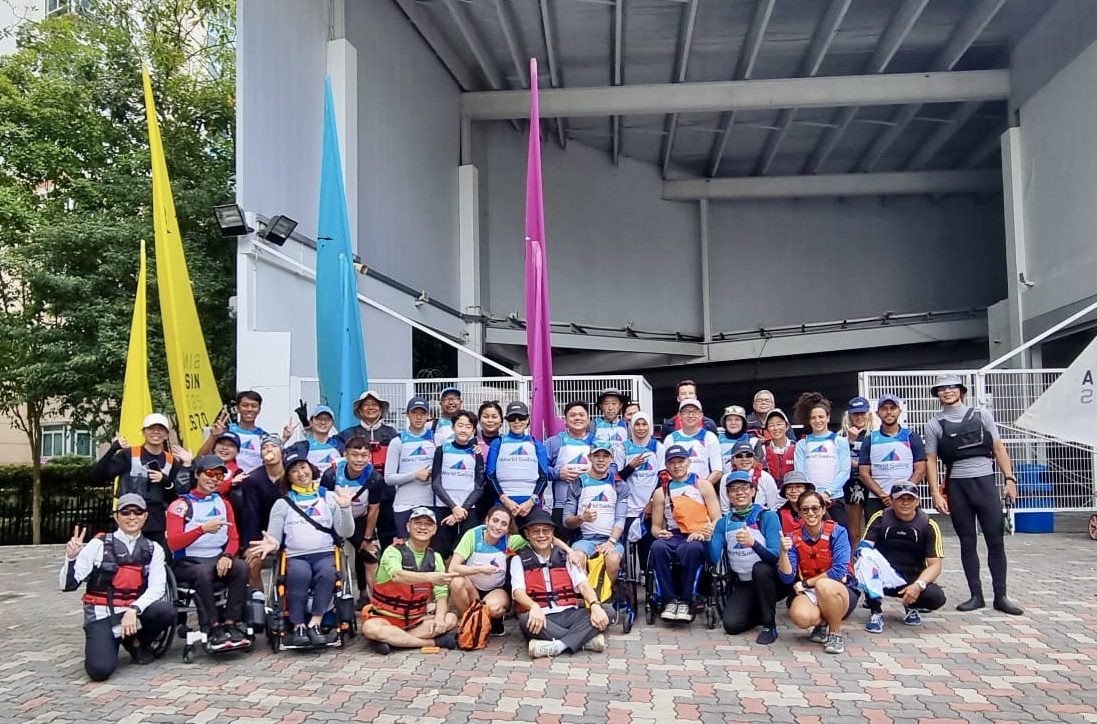
In 2023, Captain Arvind Sharma joined our Inclusive Development Programme in Singapore and brought with him a challenge that has stayed with me ever since.
What do we really mean when we talk about inclusion?
Not simply within Para Sailing, or in creating opportunities for people with disabilities to get onto the water, but across the wider sailing ecosystem. If we describe our programmes, our events and ultimately our sport as inclusive, what does that actually look like in practice?
Arvind wasn’t particularly interested in inclusion as a label. He was interested in what it did.
Did it open a door that had previously been closed? Did it create an opportunity that hadn’t existed before? Did a sailor with a disability have somewhere to learn, somewhere to race and somewhere to progress? And when they got there, were they genuinely part of the sailing community?
What happened after Singapore is perhaps the part of Arvind’s story I admire most.
He went home and got on with it.
There wasn’t the infrastructure he believed sailors needed, so he set about creating it. A sailing centre grew from that ambition at the Royal Mysore Sailing Club, designed by his wife and built around the belief that sailing, including sailing for people with disabilities, needed somewhere to grow.
Boats were needed, so boats had to be found. Opportunities to race were needed, so opportunities had to be created.
It is an attitude I love.
No place to sail? Build one. No boats? Find them. No event? Create it.
Not recklessly, and not without bringing people with you, but with a fundamental refusal to accept that the way things are today has to determine what is possible tomorrow.
That same attitude helped drive the Asian Inclusive Sailing Series (AISS), created by people connected through that 2023 programme to provide more opportunities for sailors with disabilities to compete across the region. And when the planned host was no longer able to deliver its event, Arvind didn’t accept that the sailors should simply lose the opportunity.
He picked it up. He brought it to India. He made it happen. Then, rather than declaring success and stopping there, he asked what came next.
The Eurasian Inclusive Cup was part of his answer – another step towards creating a wider international competition pathway and opening more doors for sailors with disabilities.
There is something important in that story.
We spend a lot of time in international sport talking about barriers. Many of them are very real. Accessibility, equipment, funding, geography, knowledge and attitudes can all prevent people from participating in our sport.
But occasionally we also need people who look at a barrier and ask a different question.
How do we get through it?
Arvind was one of those people.
I hope, in some small way, I bring some of that same constructive impatience to my own work.
I’ve never been particularly good at accepting that something cannot happen simply because it hasn’t happened before. Para Inclusive Sailing has needed and still needs people prepared to challenge established ways of doing things, try different equipment, create new events, open new countries and occasionally push rather firmly on doors that seem determined to remain closed.
Arvind didn’t just talk about creating opportunities.
He created them.
That’s the standard.
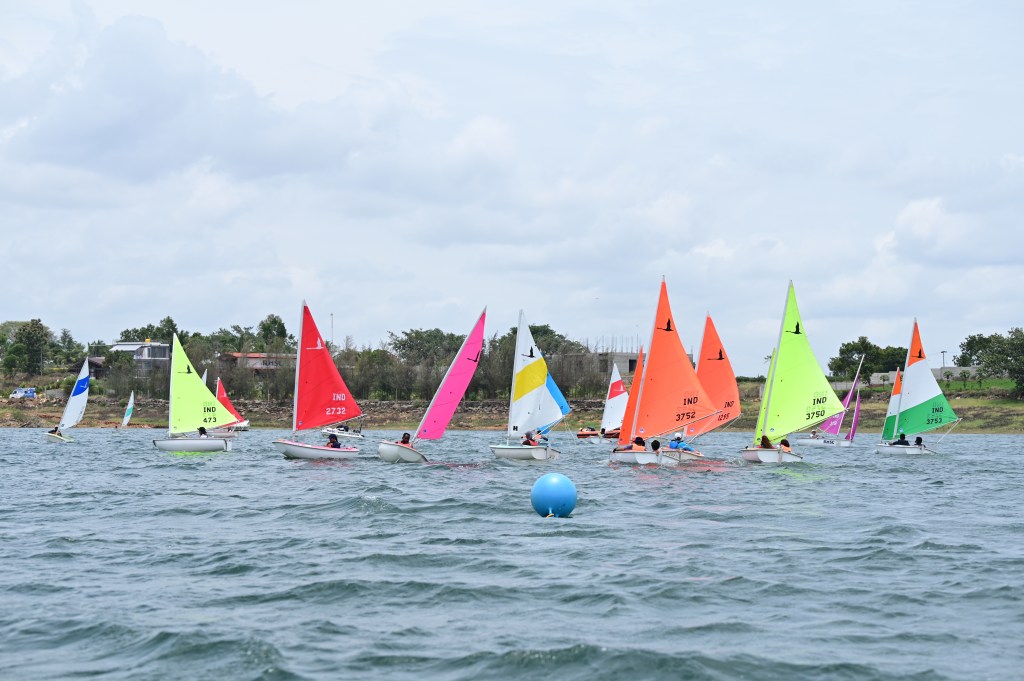
Three years after that first meeting in Singapore, I found myself standing beside a lake in Mysore watching that philosophy become very real.
At the Royal Mysore Sailing Club, 52 participants from eight countries came together for another World Sailing Inclusive Development Programme. Sailors, coaches and officials developed alongside one another before moving directly into the Eurasian Inclusive Cup.
Development flowed into competition.
That connection matters.
The Inclusive Development Programme has always been deliberately inclusive. It isn’t a Para programme sitting separately from the rest of sailing. Its ambition is broader: sailors, coaches, officials and organisations developing together, while challenging the wider sailing ecosystem to become better at including people with disabilities.
Sometimes that means adapting equipment. Sometimes it requires specialist knowledge or classification. Sometimes it means changing the way we coach, organise or deliver our sport.
And sometimes it simply means stopping ourselves from assuming that the way we have always done something is the only way it can be done.
Ultimately, though, there is a simple test.
Does the person coming through the door genuinely have somewhere to go next?
In India, when the development programme finished, the opportunity didn’t.
Sailors moved directly into international competition. Coaches applied what they had learned in a live racing environment. Officials continued developing their experience. Alongside the racing, we progressed work around classification, research and athlete support, bringing together more of the ecosystem required to support sailors with disabilities properly.
And perhaps one of the things I liked most was that much of what was happening didn’t just belong to World Sailing.
Nor should it.
Sustainable development isn’t about creating dependency on an international federation arriving with a programme. It is about sharing knowledge, connecting people, removing barriers and helping create the confidence, relationships and infrastructure that allow opportunities to grow locally and regionally.
Our job should be to enable that, then watch people take it further than we ever could ourselves.
The objective isn’t to own inclusion. It’s to create more of it.
Maybe that is why I have become increasingly impatient with inclusion as rhetoric.
There will never be a shortage of strategies, presentations, working groups or people willing to explain their commitment to inclusion. Those things can have value – but only if something changes because of them.
Inclusion isn’t a badge. It isn’t a branding exercise. It isn’t a useful word to put into a strategy or the title of an event.
Inclusion is the work.
And much of that work is decidedly unglamorous.
It is finding boats. Raising money. Making venues accessible. Training coaches. Supporting sailors. Developing officials. Working through classification. Persuading nations to participate. Fixing the things that haven’t worked. Picking things up when somebody else doesn’t deliver. Then solving the next problem, and the one after that.
It is considerably easier to talk about inclusion than it is to do all of that.
Arvind did the work.
Perhaps that is why being in Mysore felt particularly significant.
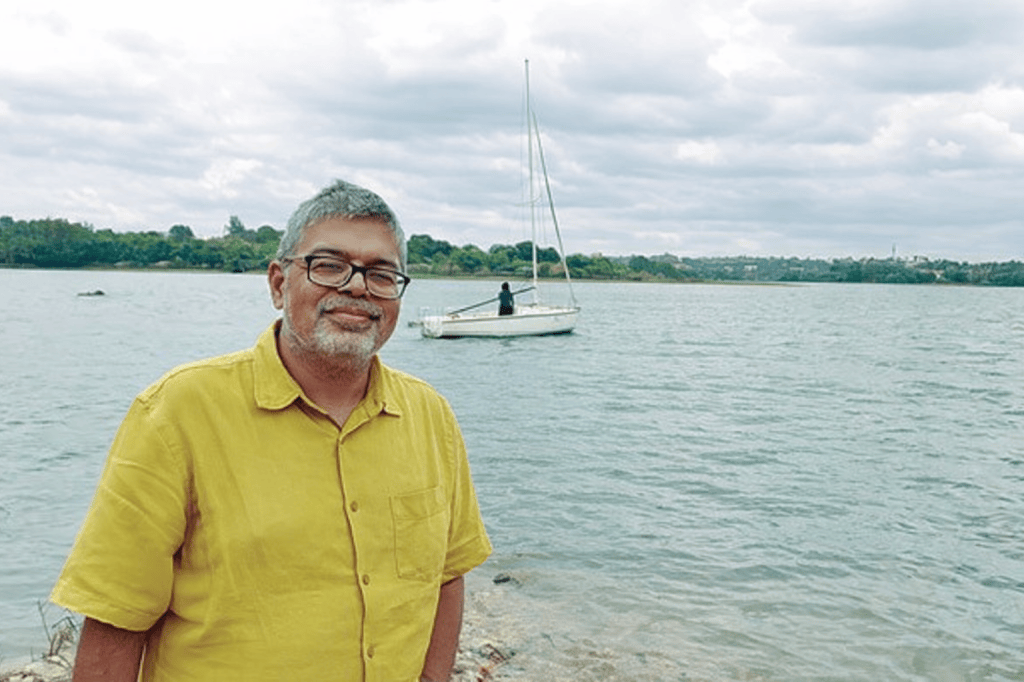
Arvind sadly didn’t get to see the Eurasian Inclusive Cup he had envisioned become reality. But his presence at the Royal Mysore Sailing Club is impossible to miss.
The new sailing centre was designed by his wife. His image looks out across the venue. And during the week, I watched his son, Agni, standing in front of it, looking out over the event his father had imagined.
It was one of those rare moments when you stop thinking about schedules, boats, results and the hundred other things consuming your attention and realise you are watching someone’s idea become a legacy.
But I suspect Arvind would also have been the first to challenge us not to become too sentimental about it.
Because there is considerably more work to do.
One programme isn’t inclusion. One series isn’t inclusion. One championship isn’t inclusion. And inviting people with disabilities into a sporting system without thinking seriously about whether that system gives them meaningful opportunities isn’t inclusion either.
The harder work is changing the ecosystem around them. Is there somewhere to sail when the programme finishes? Is there a coach who understands how to support them? Does their club see what they can do rather than what they can’t? Is there appropriate equipment? Fair classification? National competition? International competition?
And, for the athletes who want to pursue excellence, does that pathway continue all the way to the highest levels of our sport?
That is why India felt important.
Not because we can point to 52 participants from eight countries and declare success.
Because something was continuing.
Singapore created relationships. Those relationships generated ideas. Ideas helped create the AISS. When an opportunity was at risk of disappearing, Arvind made sure it didn’t. His ambition helped create the Eurasian Inclusive Cup. Development created competition, and competition is creating demand for more development.
That is how an ecosystem begins to change.
Three years ago, Captain Arvind challenged us to think harder about what inclusion really meant.
This year, I stood in the sailing centre his wife had designed. His son watched an international competition his father had envisioned. Sailors from across the region were racing. Coaches and officials were developing. Classification and research were progressing.
And, importantly, people were already asking what comes next.
That is an extraordinary legacy.
But perhaps the most important thing Arvind left us wasn’t a building, a programme or an event.
It was an attitude.
No place to sail? Build one.
No boats? Find them.
No opportunity? Create it.
Create the opportunity. Open the door. Do the work.
And if the door doesn’t exist yet?
Build that too.
Because inclusion isn’t something we get to claim.
It’s something we have to keep proving.


Leave a Reply