The WSIC Diaries — Part 1: The sailor, the medic and the human behind the championship
I’ve been trying to write something about the World Sailing Inclusion Championships since I got home, and I’m struggling. Which is unusual for me, because generally speaking, I’ve got plenty to say. Particularly when something has annoyed me.
People keep asking how it went, whether I’m happy, whether I’m proud and whether I think it was a success. The answer to all of those questions should be a resounding yes. Forty nations, more than 220 sailors, seven classes and the biggest championship we’ve ever delivered for Para and Inclusive Sailing. Something I came up with, fought for, built and believed in has become a genuinely international event, with people already talking about what comes next and how they can be part of it.
That’s bloody brilliant, isn’t it?
So why don’t I feel brilliant?
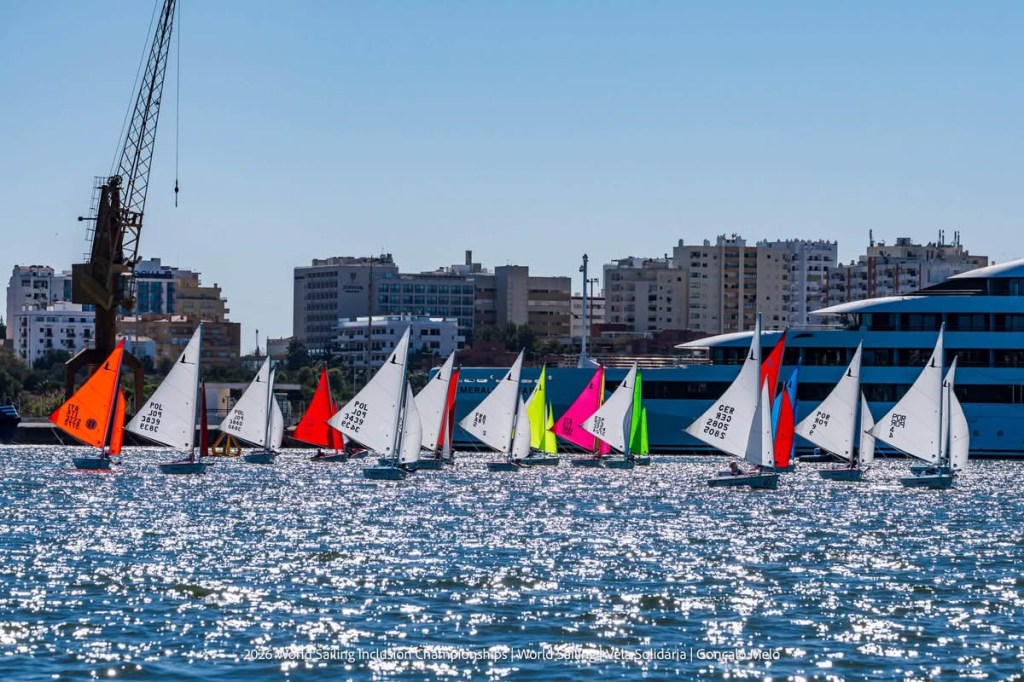
The truth is, I don’t feel particularly happy, relieved or even especially proud at the moment. I feel numb. Not necessarily sad, although I’ve come close to tears a few times without really knowing why. Just completely and utterly empty, as though somebody has pulled the plug, taken the batteries out and left me sitting here wondering why I can’t seem to function like a normal human being.
I know what we achieved. I can see it in the photographs, the messages, the results and the people who were there. I know there are sailors who have gone home having experienced something extraordinary, and I know the community we’ve been building is becoming something genuinely special. But there’s a strange disconnect between knowing all of that and actually feeling it. Everyone else seems to have come away with wonderful memories, while my brain is still busy cataloguing the things I wish we’d done differently.
Of course, it wasn’t perfect. No championship of this size ever is, particularly when you’re bringing together so many different classes, sailors, nationalities, abilities and expectations. There were difficult decisions, unexpected challenges and moments when the sheer scale of what we were trying to achieve felt almost ridiculous. There were also moments of genuine brilliance, extraordinary kindness and the sort of laughter that only happens when everyone is completely exhausted and something else utterly improbable has just occurred.
But I think the hardest part for me is that I don’t seem to have an off switch. I can look at the results, the photographs and the incredible community that came together, and still find myself thinking about the things I wish we’d done differently. Not because those things define the championship, but because I know how much it matters to the people who put their faith in it. I want every sailor to have the best possible experience, and I find it incredibly difficult to accept that sometimes doing everything you can still doesn’t mean everything will go exactly as you’d hoped.
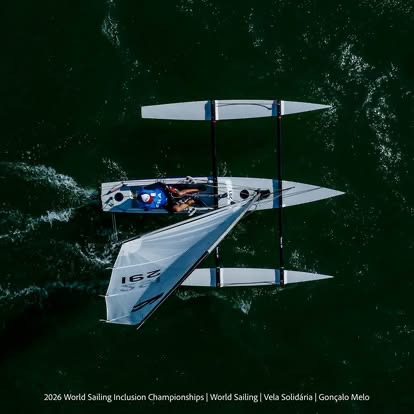
Perhaps part of the problem is that I’ve never really experienced WSIC purely as the person organising it. I don’t think I ever could. For most of the championship, I’m the one with the radios, the schedule, the answers and, apparently, the responsibility for solving absolutely anything that might happen within a five-mile radius. It’s a version of me I’ve become very good at being, but sometimes I wonder whether people remember there’s an actual human being underneath it all.
Because before I was the person creating championships, I was a sailor. I still am, even if I spend considerably more time watching other people sail these days than getting out on the water myself. Sailing has shaped almost my entire life. I know the anticipation of a start, the frustration of a bad race, the absolute joy of getting something right and the peculiar obsession that keeps us coming back for more, even when the weather is dreadful and our fingers have stopped working. I know what it means to arrive at a championship having spent months or years preparing, and I know how much those moments on tI think he water can mean.
I’m also a four-time Paralympian. Four Games, years of training, competing, campaigning and believing that sailing belonged on the biggest stage. That doesn’t disappear simply because I’m no longer the one lining up on the Paralympic start line. I know what those opportunities gave me, and I know what it felt like when sailing was removed from the Paralympic programme. Perhaps that’s why I’m so determined to create something meaningful for the sailors coming through now. I don’t want them simply to have a championship to attend. I want them to have a future, something to aspire to, and the chance to experience the extraordinary things this sport gave me.
But there’s another part of me that people perhaps see less often these days. I’m a medic, and I absolutely love it.
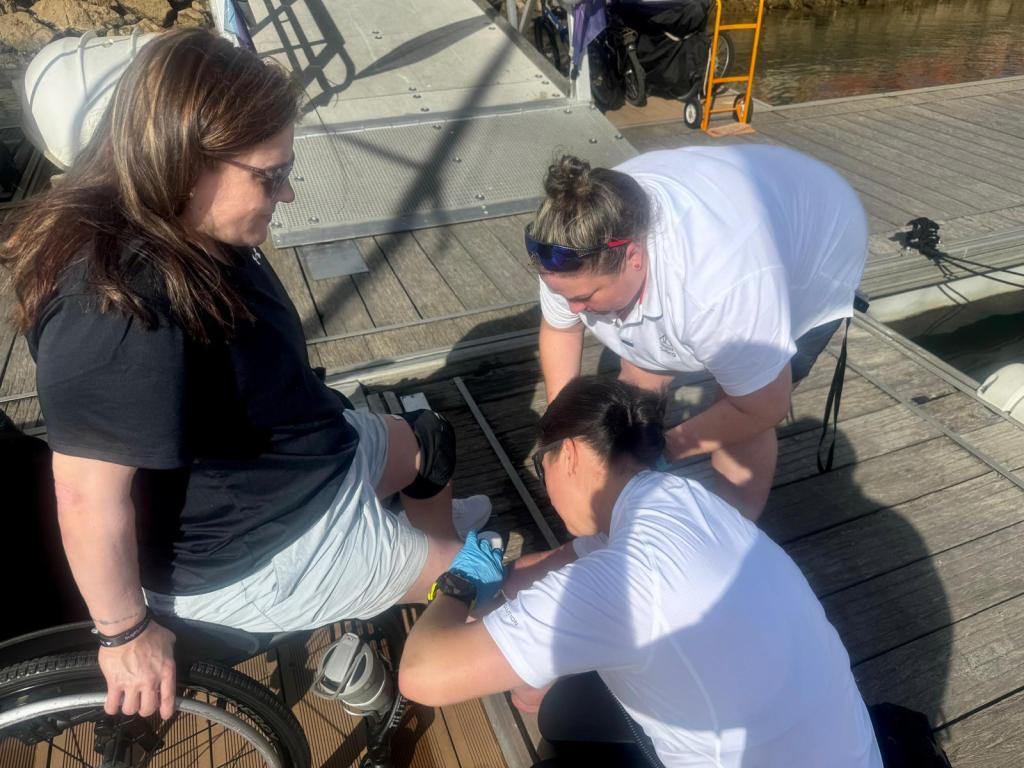
I love the practical side of it, the knowledge, the equipment, the preparation and the confidence that comes from knowing what you’re doing. There’s something enormously satisfying about having my load carrier full of kit and knowing that my leg pouch can probably fix just about anything short of a small maritime disaster. I love the adrenaline of having to think clearly, act quickly and use skills that have become second nature. Not because I want anyone to be hurt or frightened, obviously, but because being able to help someone when it really matters is something I find incredibly rewarding.
During WSIC, there was a moment when a sailor needed urgent medical assistance. I found myself scrambling across rocks and getting into a RIB to help, and I don’t remember having any great internal discussion about whether I should be doing it. Someone needed help, I had skills that might be useful, and I went. I won’t go into the details, because that’s someone else’s story, but what stayed with me was how instinctive it felt. There wasn’t a committee meeting, a spreadsheet or a complicated chain of emails. For a little while, I wasn’t thinking about being the person responsible for delivering the championship. I was the medic again, and it felt like finding a part of myself I hadn’t realised how much I’d missed.
I think that’s what I’ve been struggling to put into words. The sailor and the medic aren’t simply useful experiences that help me do my job. They’re parts of who I actually am. They make me feel alive, capable, excited and, perhaps most importantly, human. The person running the championship can sometimes feel a little like a robot: answer the question, solve the problem, make the decision, move on to the next thing. Somewhere beneath the radio and the responsibilities is a woman who still wants to go sailing, who gets an unreasonable amount of satisfaction from a well-stocked medical pouch, and who occasionally wants to do something simply because she loves it.
And I do love what we’re building with WSIC. I wouldn’t have put so much of myself into it otherwise. Watching sailors from different nations helping one another, seeing coaches and officials go far beyond what anyone could reasonably ask of them, and witnessing friendships develop between people who might never otherwise have met has been extraordinary. I’ve seen sailors discovering new opportunities, nations growing in confidence and a community coming together in a way that reminds me exactly why this championship needed to exist.
But loving something doesn’t mean it can’t exhaust you. And I think I’ve reached the point where I’m discovering just how much of myself I’ve been giving to it.
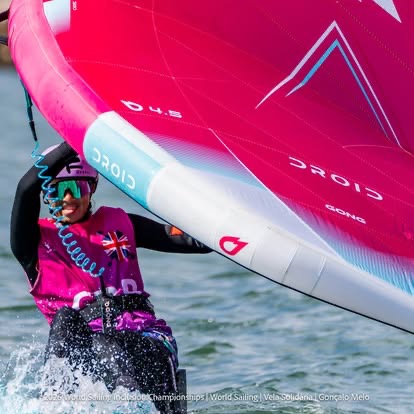
Since getting home, my dogs have been delighted to have their personal staff member back, although I suspect that’s largely because normal service has resumed in the food and cuddles department. My body, meanwhile, appears to have submitted a formal complaint. My feet hurt, my legs ache and I’ve fallen asleep on the sofa without meaning to more than once. I’m exhausted in a way that doesn’t seem to disappear after a night’s sleep, but the moment I’m awake, my brain starts working through everything I should be doing.
There are emails I haven’t answered, reports I haven’t written, people I want to thank properly, conversations I need to have and improvements I already know we need to make. I find myself thinking about the next championship, the next development programme, the next opportunity and the next problem that needs solving. It’s almost as though I’ve forgotten how to exist without a list of things that require my attention.
The ridiculous thing is that I’m actually on leave. I’m supposed to be taking a break, recovering, sleeping properly and perhaps remembering what life looks like when it doesn’t revolve around race schedules, boat rotations and whether somebody has returned a tracker. I’m also supposed to be moving house, because apparently organising an international championship wasn’t quite enough jeopardy for one month.
I’d planned to use this week to pack, move my belongings and finally start settling into the next chapter of my life. Except the house sale still hasn’t exchanged, the solicitors are still doing whatever mysterious things solicitors do, and I don’t even know whether I should start putting my life into cardboard boxes. So instead of moving, recovering or enjoying a few days off, I’m sitting here feeling guilty that I’m not working and frustrated that I can’t get on with my actual life.
And the guilt is a real battle.
I feel guilty for not answering messages quickly enough, guilty for not immediately writing the reports, guilty for not being available and guilty for wanting to concentrate on something as ordinary as moving house. Even writing that feels ridiculous. I know I’m entitled to have a personal life, and I know nobody can work indefinitely without taking a break. But there’s a difference between knowing something and actually allowing yourself to believe it.
I think when you’ve spent so long being the person who needs to have an answer, make a decision or find a solution, stopping can feel almost irresponsible. During the championship, there was always something that needed attention, often urgently, and the consequences of getting it wrong could be significant. You learn to keep going because people are relying on you, because the event matters and because stopping doesn’t feel like an option. But when that intensity suddenly disappears, your brain doesn’t necessarily get the message.
And perhaps that’s part of the numbness. I’ve spent so much time concentrating on what needed to happen next that I haven’t really had the chance to process what was happening around me. Even during moments that should have been celebrations, part of my brain was already working through the next problem. Now that I’m home, I can look at the photographs, read the messages and hear people talking about what an extraordinary championship it was, but there’s still this strange distance between knowing something wonderful happened and actually feeling the joy of it.
I don’t think people always see that side of delivering an event. They see the championship, the photographs, the medals, the racing and the community. They see the person who gets things done, makes decisions and can occasionally be a little terrifying when something needs sorting. What they don’t necessarily see is the person who goes home, falls asleep on the sofa, feels guilty for taking leave and wonders why she can’t summon the energy to pack a single cardboard box.
And I don’t think I’ve been particularly good at seeing that person either.
I’ve become very good at recognising what needs doing and considerably less good at recognising what something has cost me. I’m good at finding another solution, making another plan, getting into another boat or having another difficult conversation. I’m less good at admitting that I’m tired, that something has upset me or that perhaps I can’t keep doing everything at the pace I’ve been doing it. I suspect I’ve spent quite a lot of the past few months confusing resilience with simply refusing to stop.
I don’t have a particularly profound lesson to offer about any of this. I’m not suddenly going to become someone who doesn’t care quite so much, and I’m certainly not about to develop a miraculous ability to switch off overnight. I still believe fiercely in what we’re building, and I still want to make it bigger, better and more meaningful for the sailors who deserve these opportunities. There are things we need to improve, conversations we need to have and plenty of work ahead of us.
But perhaps I do need to remember that I’m allowed to exist outside of it.
I’m allowed to miss sailing. I’m allowed to love being a medic. I’m allowed to enjoy the things that make me feel like myself, rather than constantly being the person responsible for making things happen for everyone else. And, apparently, I’m allowed to take a week off and attempt to move house without feeling as though I’ve committed some terrible act of professional abandonment.
Whether my brain is prepared to accept any of that is another matter entirely.
There will be another blog about the sheer ridiculousness of Portimão, because frankly some of what happened deserves to be documented for historical purposes, if not investigated by a small international tribunal. There will be stories about extraordinary people, improbable solutions, moments of absolute disbelief and the kind of laughter that only happens when you’ve all reached the point of complete exhaustion. There will be photographs, celebrations and proper thanks to the people who helped make this championship happen, because there are so many who deserve recognition.
And there will be more about what WSIC means for the future of our sport, because forty nations and more than 220 sailors coming together isn’t simply a statistic. It’s evidence of something we’ve been working towards for years, and something I believe can become even more important as we continue fighting for sailing’s Paralympic future.
But I don’t think I can write all of that just yet. I’m still somewhere between pride, disappointment, relief, exhaustion and an almost overwhelming sense of responsibility. I’m trying to find the joy in something I know was extraordinary, while also trying to give myself permission to step away from it for a little while. I’m trying to remember that taking a break doesn’t mean I care any less, and that the championship will still exist when I come back to my emails.
Maybe in a few days, when I’ve slept properly, my feet have stopped protesting and somebody has finally persuaded the solicitors to exchange contracts, I’ll be able to look back and see what everyone else seems to see. A championship that brought people together, a community that keeps growing and a future that feels possible.
For now, though, these are my first words. They’re not the triumphant reflection I thought I’d be writing, and I haven’t managed to make sense of everything just yet. But they’re real, and perhaps that’s enough for now.
Somewhere beneath the radio, the schedules, the responsibility and the apparently endless ability to find another solution, I’m still here.
I’m just trying to remember how to be me again.


Leave a Reply