The SailingHannah Chronicles – Part Two
There comes a point in organising a World Championship when you begin to question your life choices. Not in a dramatic, staring-out-to-sea, contemplating-the-meaning-of-life sort of way. More in a “Where is that boat, who has the tracker, why is everyone calling me on the radio, and when did I last eat something resembling a meal?” sort of way.
Welcome to Portimão.
Now, I should start by saying that the World Sailing Inclusive Championships were extraordinary. Truly. Forty nations, hundreds of sailors, a marina full of ambition, and enough wonderful moments to make even my deeply cynical little heart feel something.
But goodness me, did we have to work for it.
Because behind every international championship is a remarkable collection of people juggling logistics, solving problems, adapting to the unexpected and occasionally surviving on caffeine, WhatsApp messages and the vague hope that somebody, somewhere, has actually read the instructions.
And this year, I was apparently one of them.
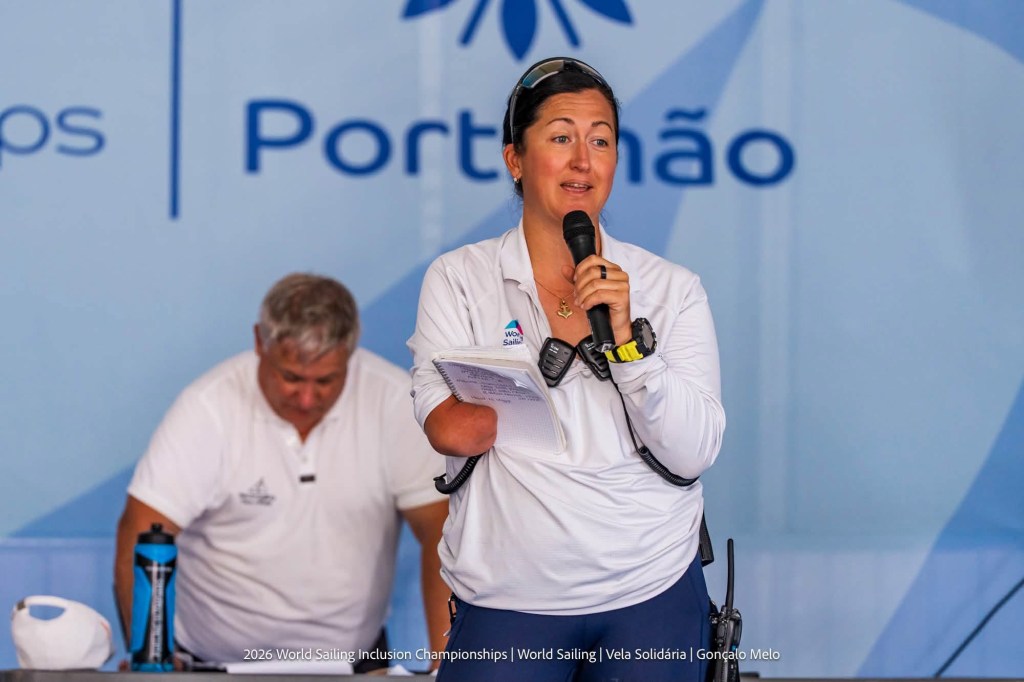
Things Heard on the Radio
If anyone ever tells you that race management is a dignified and entirely serious business, I would like to present Exhibit A: the radios, specifically Channel 69.
Normally a tool for clear, concise communication between race officials, safety teams and the shore. In Portimão, occasionally an unexpected source of comedy.
At one point, the immortal words “Stoggs is in my knickers” were transmitted.
To everyone.
A sentence which, without context, raises considerably more questions than it answers, and one that will probably follow us around the international sailing circuit for some time.
There was also the regular chorus of “Taxi, taxi…”, usually followed by “Hannah, over.” It became something of a personal soundtrack, as I apparently evolved from Para World Sailing Manager into a maritime taxi dispatcher, logistics coordinator and occasional finder of things.
All for the same salary.
Somewhere amongst the increasingly creative radio traffic, we were also delivering an international sailing championship. A minor detail, admittedly, but one we felt was probably worth remembering.
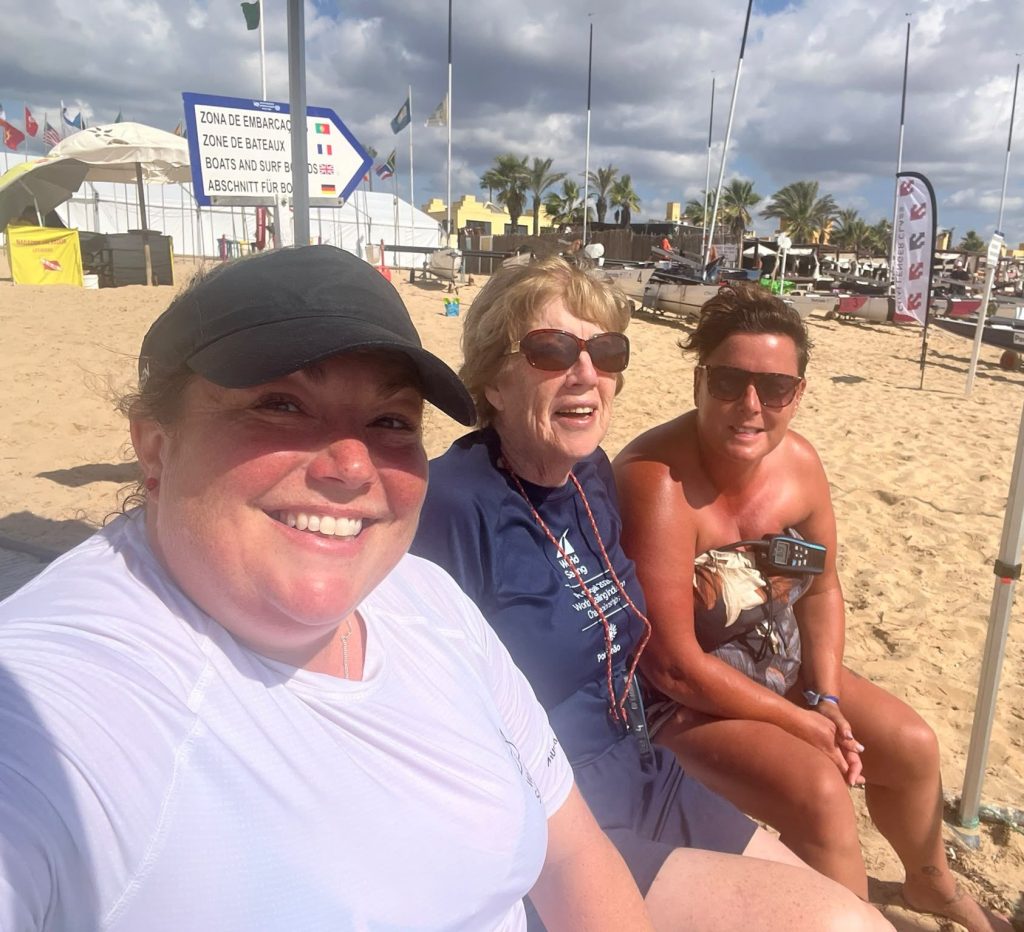
The Scottish Launching System
There are sophisticated launching systems at major international sailing events. Hydraulic lifts, purpose-built pontoons and carefully engineered infrastructure designed to make getting boats onto the water a seamless operation.
And then there was Angela.
Angela was a volunteer. Angela was Scottish. Angela was also, as it turned out, one of the most important components of our beach launching operation.
With a wonderfully practical approach, a great deal of determination and an impressive ability to organise people, Angela helped keep the launching system moving and ensured sailors could get onto the water.
The Scottish Launching System was born.
No software updates required. No batteries. Just Angela, teamwork and an impressive ability to make things happen.
Frankly, we should patent it.
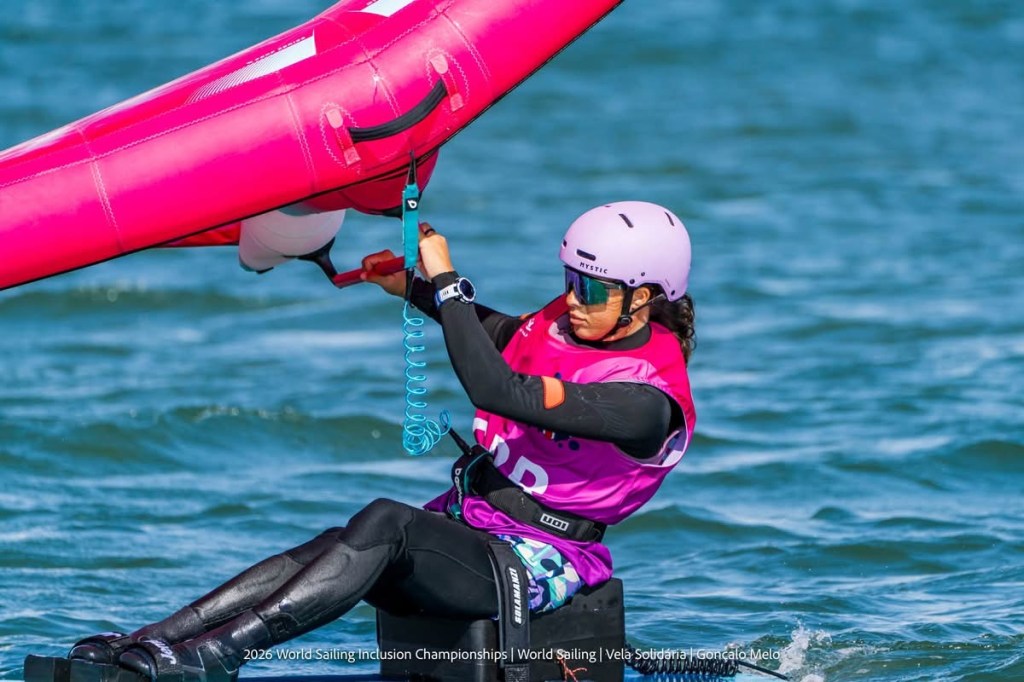
The Wangers and the Beach of Chaos
Then there were the wangers.
Or the wingers, if we’re being terribly professional.
Our Para Wing sailors were competing in one of the newest and most exciting areas of Para Inclusive Sailing, which meant that alongside the usual complexities of international competition, we were also exploring equipment, adaptations, new racing formats and the small inconvenience of trying to persuade the wind to cooperate.
And presiding over the beach-based activity was Jazz.
Jazz somehow found herself managing an ever-changing collection of wings, boards, foils, sailors, equipment and questions, all while the Portuguese weather appeared determined to ignore our carefully considered plans.
There is something particularly entertaining about trying to organise a developing discipline when half the equipment wants to fly, the other half wants to float, and the wind occasionally decides that neither is necessary.
But Jazz kept things moving, the sailors kept experimenting, and the coaches kept adapting. FoilDrive provided four units that allowed sailors to make use of lighter conditions, which was an enormous help when Mother Nature decided she had better things to do.
And while the beach might occasionally have resembled an experimental equipment laboratory, it was also one of the most exciting parts of the Championships.
Because development isn’t always neat. Sometimes it involves trying something new, discovering it doesn’t quite work, changing it, trying again and learning an enormous amount along the way.
Preferably without losing a foil.
A Leg Has Been Lost
There are certain radio messages that make you stop what you’re doing.
“Someone’s lost a leg.”
That is one of them.
Thankfully, this was not a medical emergency. The leg in question was a prosthetic, and the situation quickly became a rather unusual but entirely practical equipment delivery request.
Could somebody please bring the prosthetic out to the racecourse?
Because apparently at WSIC, we don’t just deliver spare sails, replacement equipment and drinking water. We also offer an offshore limb delivery service.
And actually, that’s rather wonderful.
At an inclusive championship, the support required by sailors comes in all shapes and sizes. Sometimes it’s an adapted boat, sometimes it’s additional assistance on shore, and sometimes it’s simply making sure someone has the equipment they need.
Even when that equipment happens to be a leg.
Just another day at WSIC.
Baywatch, But Make It Para Sailing
There was also a genuine medical incident during the Championships, and somewhere in the middle of supporting the response, I found myself needing a lift away from the rocks courtesy of Taxi.
Now, in my version of events, this was a magnificent Baywatch moment. Dramatic arrival, heroic rescue, perhaps a little slow-motion running and possibly some music.
The reality was almost certainly considerably less graceful, involving an awkward extraction, a complete absence of glamour and me looking like a woman who had made several questionable decisions.
Nevertheless, I am choosing to remember it as Baywatch.
It’s my blog.
The incident itself was handled by the people who needed to be involved, and it was a reminder that behind the racing and the celebrations, there is a dedicated community of officials, volunteers and support teams ready to respond when someone needs assistance.
And then, once everything was under control, it was back to racing and whatever unexpected logistical request came next.
When the Medic Needs a Medic
There is a particular irony in spending part of a World Championship helping with a medical incident, only to discover that you might also be in need of a little medical attention yourself.
Because apparently, alongside Para World Sailing Manager, race officer in training, maritime taxi dispatcher and occasional guide dog sitter, I had somehow added unofficial medical assistant to my increasingly questionable list of responsibilities.
And then, rather inconveniently, my own body decided it had some opinions about the situation.
Enter Kristoff from Trinidad and Tobago.
An actual doctor.
Which was rather fortunate, given that my own approach to personal wellbeing at that particular moment consisted largely of stubbornness, caffeine and the belief that everything could be resolved by getting on with it.
Kristoff assessed the situation and delivered some frankly unreasonable medical advice.
Apparently, I needed to reduce my stress levels.
At a World Championship.
That I was organising.
With multiple racecourses, hundreds of sailors, volunteers somehow doing the work of three people each, an ever-growing list of logistical challenges and the occasional unexpected equipment delivery.
Excellent suggestion, Doctor. I’ll pop that straight onto the to-do list, somewhere between find Grant’s boat and locate someone’s leg.
He also suggested that I might consider eating something that wasn’t Red Bull.
Which seemed a little judgmental, given that Red Bull had become one of my primary food groups.
Nevertheless, I appreciated the professional intervention. Particularly because Kristoff was absolutely right, even if I was in no position to do anything sensible with that information.
It was another reminder of something rather wonderful about this community. Even in the middle of an international championship, people looked after one another. Kristoff didn’t have to step in, but he did, just as so many others did throughout the event.
And for a brief moment, the person who was supposed to be looking after everyone else was made to sit still and be looked after herself.
Naturally, I found this deeply inconvenient.
But thank you, Kristoff. For the medical expertise, the kindness and the entirely unrealistic expectation that I might stop being stressed.
I’ll work on the food.
The stress might take a little longer.
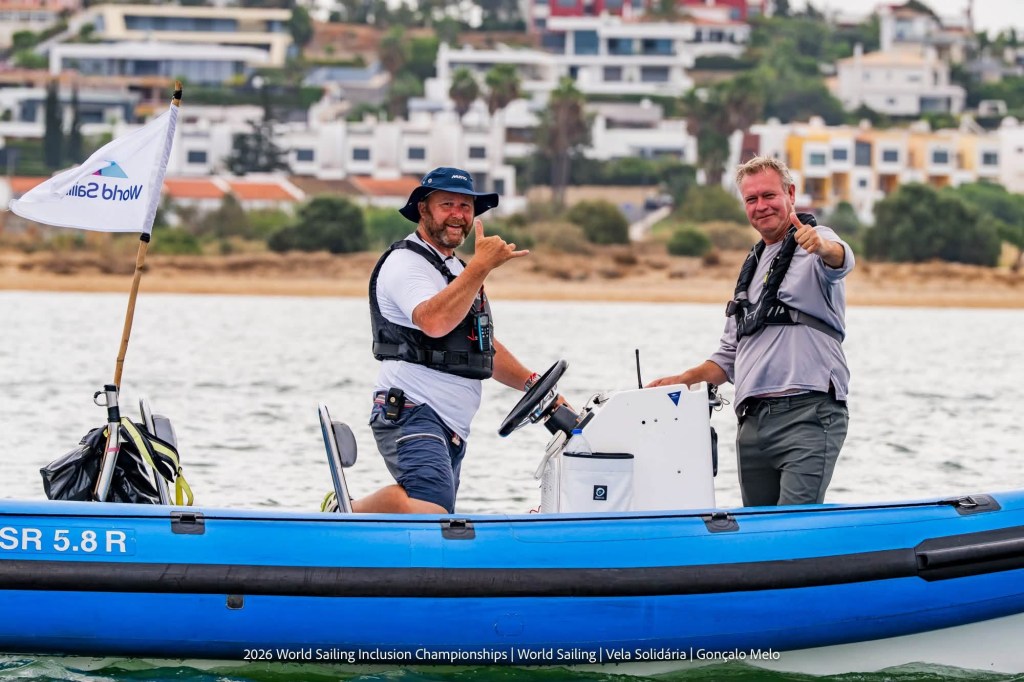
The Curious Case of the Borrowed RIBs
At a championship involving multiple classes, racecourses, coaching, classification and safety operations, there is an impressive amount of coordination required to make sure the right people and equipment are in the right places at the right times.
And sometimes that coordination involves a rather creative approach to sharing resources.
RIBs were constantly being allocated, moved, shared and occasionally borrowed for another important job. It became something of a logistical puzzle, although thankfully one that the team became rather good at solving.
Then, just to add a little entertainment to proceedings, Luis decided to hide Grant’s RIB.
For banter.
Because clearly what a busy international championship needed was a practical joke involving the temporary disappearance of a coach’s boat.
Somewhere, Grant was trying to work out where his RIB had gone, while Luis was presumably enjoying himself enormously.
I would like to point out that making a coach’s RIB disappear is not a recognised World Sailing development activity, although perhaps it should be added to the next programme under Problem Solving and Emotional Resilience.
Fortunately, the boat was accounted for, the joke became another story for the collection, and the team continued coordinating the rather impressive number of boats required to keep the Championships running.
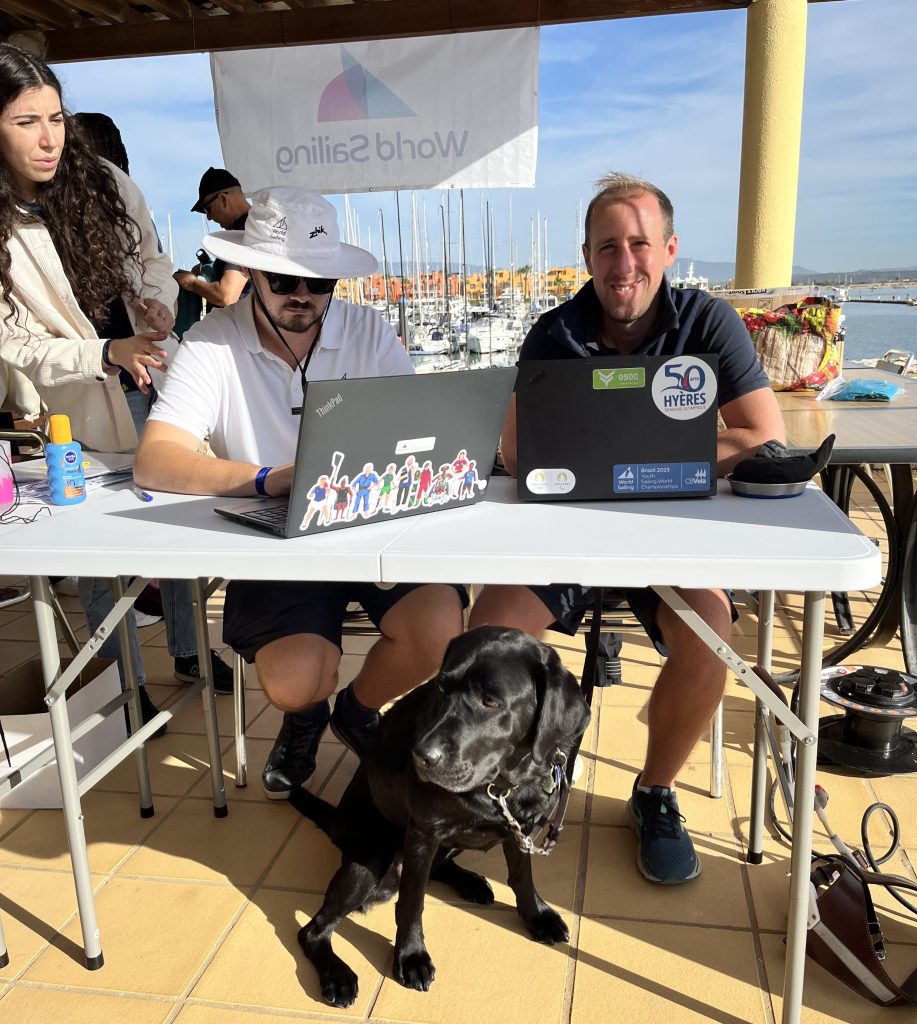
The Unofficial Guide Dog Sitting Service
As if the fleet management, launching operations, classification schedules and race organisation weren’t quite enough, we also somehow established an unofficial guide dog sitting service.
Because, naturally, when you are running a major international Para Inclusive Sailing event, there are also some extremely important four-legged members of the community who require looking after while their humans are out racing.
And quite rightly so.
The guide dogs were, frankly, amongst the more reasonable participants at the Championships. They didn’t complain about race schedules, ask whether they could change boats or send increasingly urgent WhatsApp messages about matters already covered in the Sailors’ Guide.
They were also significantly better at following instructions than some of the humans.
So, alongside our maritime taxi service and occasional unusual equipment deliveries, we became dog sitters.
And I rather loved that.
Because inclusion isn’t always about grand gestures or complicated systems. Sometimes it’s simply recognising what someone needs to participate and finding a practical way to make it happen.
Even if that means your international championship suddenly includes a small but extremely distinguished canine delegation.
Hannah 2: The Woman Who Really Should Have Learned Her Lesson in Oman
And then there was Hannah 2.
You would think that having survived Oman with me, she might have learned her lesson. Apparently not. Because when Portimão came around, there she was again, willingly signing herself up for another adventure in the wonderfully unpredictable world of Para Inclusive Sailing.
And thank goodness she did.
Hannah 2 is one of those extraordinary people who simply gets stuck in. No drama, no fuss, no standing around waiting for someone else to sort things out. If something needs doing, she’s already halfway through doing it, usually while I’m still explaining what the problem is. She brought humour, common sense, endless patience and a truly ridiculous amount of energy to the Championships, and I genuinely don’t know what I would have done without her.
Of course, Portimão did its best to test her commitment. She was assaulted by a Challenger, clobbered by an ILCA, ended up with a foot held together by tape and discovered that her Airbnb apparently considered electricity an optional extra. At some point, I began to wonder whether she had accidentally enrolled in an extreme survival challenge rather than volunteered at a sailing championship.
But she kept smiling, kept helping and kept being the absolute legend that she is.
And you’d think that would have been enough.
Oh no.
Because having survived Oman and Portimão, Hannah 2 has now agreed to help me move house.
Yes. Actual house moving. Boxes, furniture, chaos and me probably having some sort of emotional breakdown over where to put the desk.
I am beginning to suspect she has a dangerously underdeveloped sense of self-preservation.
Whether she’ll still consider me a friend by the time the last box is unpacked remains to be seen. And whether she’ll answer my calls when I start mentioning Gdynia 2027 is an entirely separate question.
I suspect she may already be investigating how to block my number.
But beneath all the jokes, Hannah 2 is one of those people I’m genuinely incredibly lucky to have in my corner. She’s generous with her time, endlessly supportive, utterly dependable and somehow still willing to turn up when I need her, even when experience should have taught her to run in the opposite direction.
Hannah 2, you’re an absolute superstar. Thank you for everything you did in Portimão, for surviving the madness with me, and for being the sort of friend who shows up again and again.
And if you’re reading this, please don’t cancel on the house move. We can discuss Gdynia afterwards.
Cath: Whatever Needs Doing, Apparently
And then there was Cath.
Cath arrived as Taxi’s other half, which probably sounded like a perfectly manageable role before she discovered that at WSIC, everyone eventually becomes part of the organising committee whether they intended to or not.
One minute she was helping Mary, our Irish sailor. The next she was an anti-doping chaperone. Then a sandwich collector. Then undoubtedly being asked to do something else entirely because somebody had spotted a competent human being and decided not to waste the opportunity.
Cath became one of those people who simply appeared wherever help was needed, often doing jobs that weren’t remotely what she had originally expected to be doing.
And that’s something I genuinely love about this community.
People don’t always ask whether something is in their job description. They see a problem, they see someone who needs help, and they get on with it.
Sometimes that means helping a sailor. Sometimes it means supporting an important anti-doping process. Sometimes it means ensuring that a group of exhausted officials actually eat something before they fall over.
All equally valuable, particularly the sandwiches.
Cath, you were magnificent. And I hope Taxi warned you what you were getting yourself into.
Marie, Patron Saint of Keeping Everyone Alive
Every event has someone who quietly makes everything run a little more smoothly.
For us, that person was Marie.
Marie somehow managed to keep people fed, functioning and vaguely sane while the rest of us moved between racecourses, meetings, equipment, logistics and the endless stream of questions that comes with an event of this scale.
There are people who manage logistics, and there are people who manage human beings who have forgotten how to function as human beings. Marie did both.
She was one of those wonderful people who seemed to know what needed doing before anyone else had even realised there was a problem.
And I remain convinced that without her, several of us would still be wandering around Portimão looking for food, accommodation and our remaining dignity.
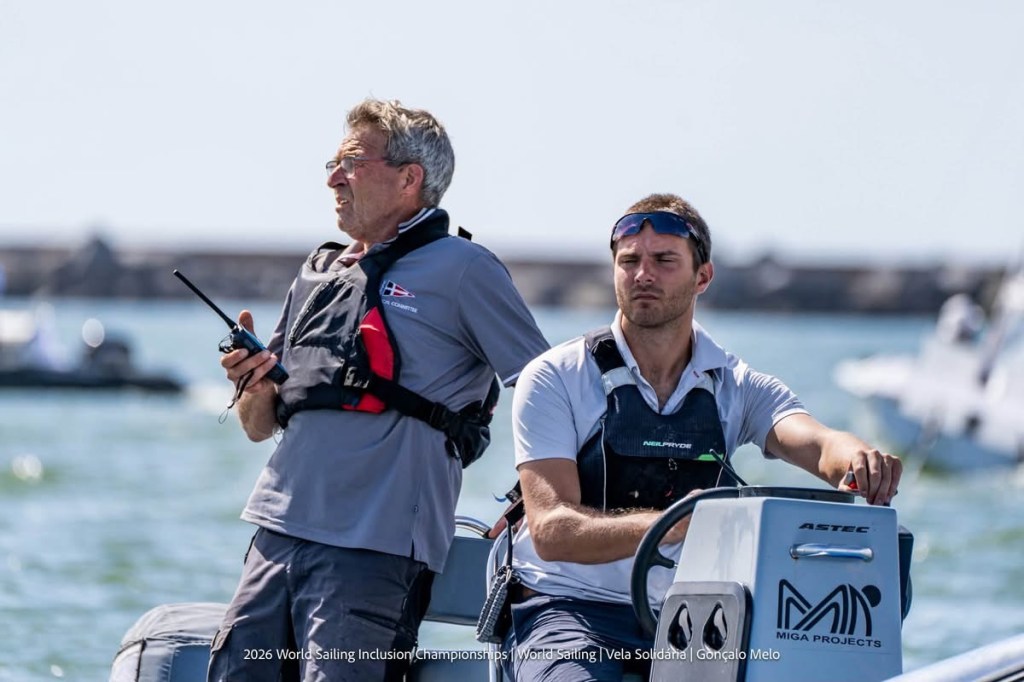
Tom: German Engineering, a Mini RIB and a Very Small Lifejacket
And then there was Tom. Our measurer, unofficial transport department, mobile workshop and quite possibly the most German man ever to answer a radio.
Tom drove boats and two vans all the way from Germany to Portimão, which would have been quite enough of a contribution for most people. But apparently Tom hadn’t finished. Every morning, he collected me in his van and drove me to the venue, which meant my day began with German efficiency before descending into the usual Portuguese chaos.
And then he fixed things.
Everything, apparently.
If something broke, needed adjusting, required a spare part or had simply decided it no longer wished to function, Tom was your man. His van was less a vehicle and more a mobile chandlery, engineering workshop and emergency supply depot. I’m fairly certain you could have built an entirely new sailing fleet from whatever was lurking in the back.
At one point, he even produced his own miniature RIB from the van.
An actual little RIB.
Because of course he did.
Most people bring a toolbox. Tom apparently brings an entire support fleet, just in case.
His personal equipment arrangements, however, were rather less successful. Someone stole his lifejacket, which was subsequently replaced with a children’s one. So there was Tom, keeping an international championship functioning through sheer engineering competence, while apparently being issued safety equipment intended for someone approximately half his size.
The irony was not lost on me.
But my favourite thing about Tom was the radio.
No matter what was happening, how complicated the request or how many people were calling him, his response was always the same.
“Yes.”
Not “I’ll see what I can do.” Not “Where exactly are you?” Not even “What have you broken now, Hannah?”
Just a wonderfully decisive, incredibly German “Yes.”
And somehow, whatever needed doing got done.
Tom was one of those extraordinary people who made everyone else’s jobs possible. He measured boats, transported equipment, solved problems, found spare parts and quietly kept an astonishing amount of the operation moving.
And he drove me to work every morning, which, given the state I was usually in, probably deserves some sort of additional medal.
Tom, you were an absolute legend. Thank you for the miles, the patience, the engineering miracles and the endless supply of solutions.
Yes.
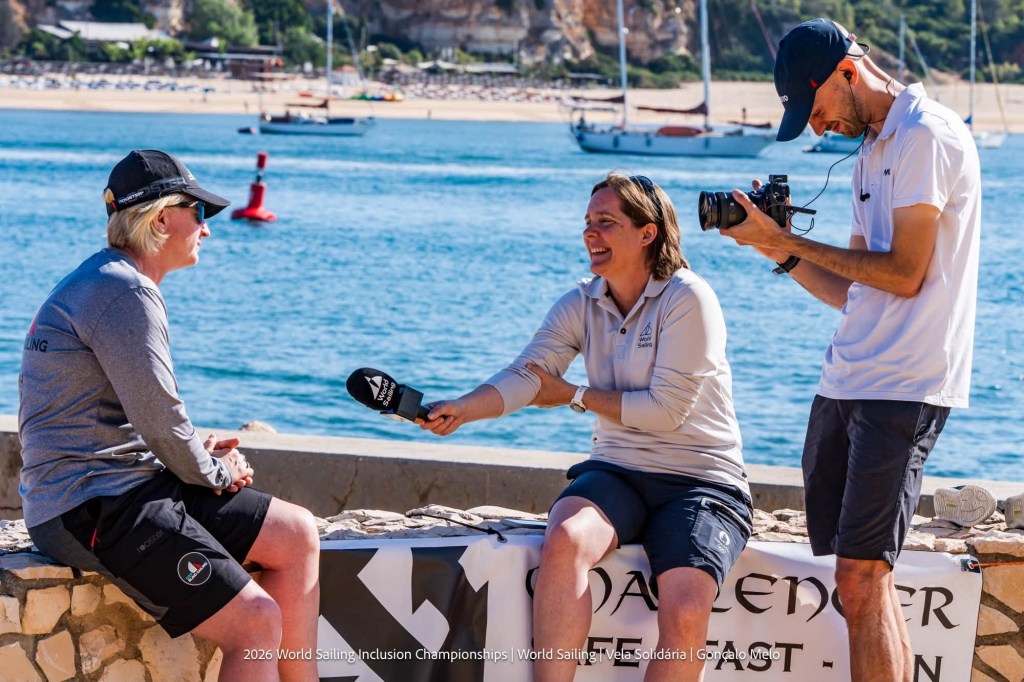
Positive Dog Communications
Meanwhile, back in the World Sailing communications universe, Lindsey and Tom were doing their best to maintain a steady stream of positivity.
Which, given the number of stories unfolding across the Championships, was a rather impressive achievement.
While the operational team was coordinating equipment, racecourses and the occasional unusual request, the communications team was capturing the extraordinary stories happening throughout the event.
And there were so many worth telling.
The achievements of emerging nations. The friendships forming across fleets. The excitement of new disciplines. The dedication of volunteers. The incredible determination of sailors.
Of course, behind every beautiful photograph was usually somebody just outside the frame carrying a bag, moving equipment, answering a radio or looking for a coffee.
The phrase “positive dog comms” became rather appropriate.
Good dogs. Excellent comms.
And plenty of wonderful stories to tell.
Matt and the Case of the Disappearing Trackers
Matt had a job. Well, several jobs. But one of them involved trackers, which would have been considerably easier if the trackers had remained where they were supposed to be.
Instead, tracking devices occasionally appeared to develop their own independent travel plans.
There is a particular irony in temporarily misplacing a device specifically designed to tell you where something is.
But this wasn’t just any missing tracker.
Oh no.
At one point, the search became a rather impressive collaborative effort involving the army and the police.
Yes. The actual army. And the actual police.
To help locate a tracker.
I feel this is the moment at which our event logistics officially entered an entirely new category.
There are international championships where the most complicated logistical issue is getting enough sandwiches to the jury boat.
And then there is WSIC, where even the search for a small electronic device becomes a multinational team effort.
You couldn’t make it up.
Matt, meanwhile, continued making the technology, results and tracking systems work, with the patience and persistence of someone who had accepted that the unexpected was simply part of the job.
And somewhere in Portugal, there are probably members of the armed forces wondering how they became involved in a sailing championship’s lost property department.
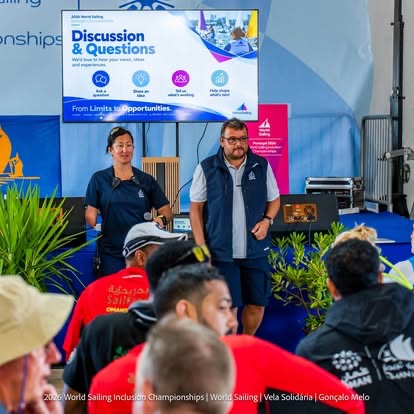
Ferran Discovers Para Chaos
And then Ferran arrived.
Our Director of Events. A man with considerable experience of international sailing events, who presumably thought he understood what delivering a World Championship involved.
Then he met Para chaos.
I would love to know precisely how many minutes passed before he realised that Para Inclusive Sailing brings an entirely different collection of logistical adventures.
Because there is normal event management, and then there is coordinating a championship involving multiple adapted fleets, emerging nations, specialist equipment, guide dogs, prosthetic limb deliveries and an unusually memorable radio transmission about someone’s underwear.
Welcome to the team, Ferran.
We’re delighted to have you.
Baby Race Officer
And somewhere amongst all this, I found myself on Delta course, learning to be a race officer.
A baby race officer, if you will.
Now, having spent most of my life on the other side of the starting line, I have considerable experience of having opinions about race officers.
It turns out that being one is rather different.
There are flags, sequences, people expecting you to make decisions and, somewhat unreasonably, those decisions are supposed to be correct.
But I loved getting involved. Because however much of my working life is now spent managing programmes, meetings, budgets and the occasional international diplomatic incident, I am still a sailor.
And being on the water, helping deliver racing, reminded me of that.
Even if I was very much the baby of the race management family.
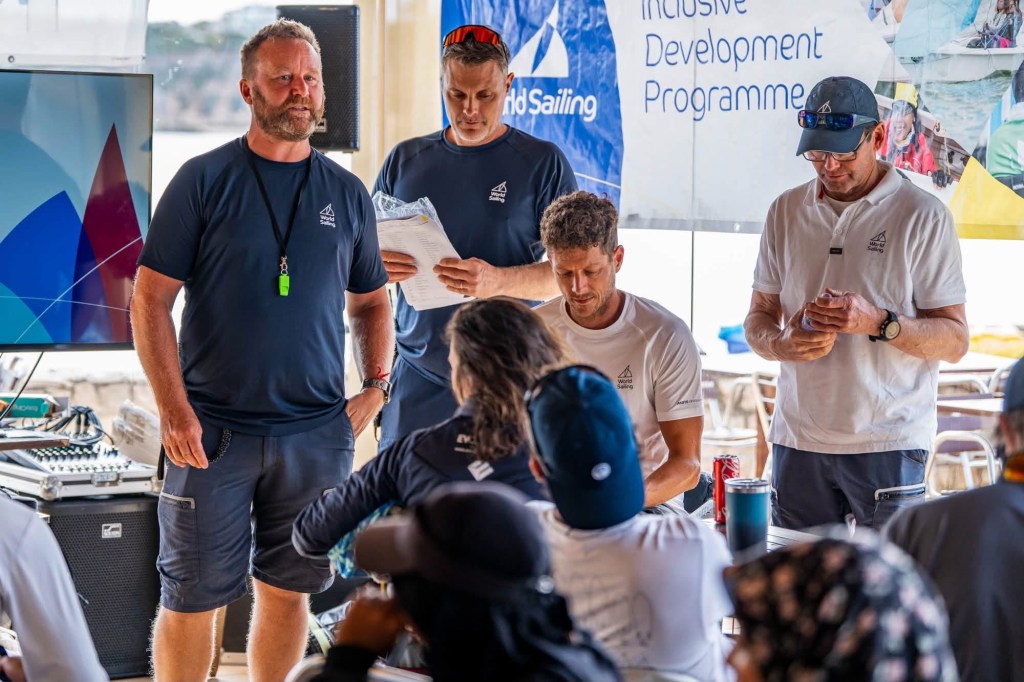
Five Coaches, Questionable Life Choices and One Traumatised Apprentice
And then there were my IDP coaches.
Dan, Simon, Grant, Logan and Guillaume. Five wonderful human beings who arrived in Portimão to deliver some development coaching and somehow ended up becoming an essential part of the entire championship.
Because apparently, when I say “Would you like to help with the IDP?”, what I actually mean is “Would you like to spend the next fortnight coaching, mentoring, moving boats, solving problems, answering approximately seventeen thousand questions and occasionally reconsidering your relationship with me?”
And goodness me, did they deliver.
Dan was back doing what he does best, helping emerging nations build their sailing programmes, supporting coaches and giving sailors the confidence to take their next steps. Having taken his original PDP and developed it into today’s wider IDP, there was something rather special about having him alongside me again. Full circle, with considerably more boats, more nations and a truly unreasonable number of WhatsApp messages.
Simon and Grant brought their wealth of Performance coaching experience, helping sailors develop their racing skills while somehow finding the energy to keep supporting people throughout the Championships. Although Grant also received an unexpected lesson in emotional resilience when Luis decided to hide his RIB. Apparently even the coaches needed development opportunities.
Guillaume took on the wangers, bringing his expertise, enthusiasm and an impressive ability to remain optimistic while the wind repeatedly refused to participate. Developing a new discipline is never straightforward, but he embraced every challenge and helped make Para Wing a genuinely exciting part of WSIC.
And then there was Logan.
Our apprentice coach.
Who, rather than being gently introduced to the world of international coaching, found himself learning from Dan, Simon and Grant.
Simultaneously.
I’m not entirely sure this constitutes a recognised coach development pathway. It feels more like an accelerated programme in psychological resilience, delivered by three men who have collectively forgotten more about sailing than most people will ever know.
Lord help him.
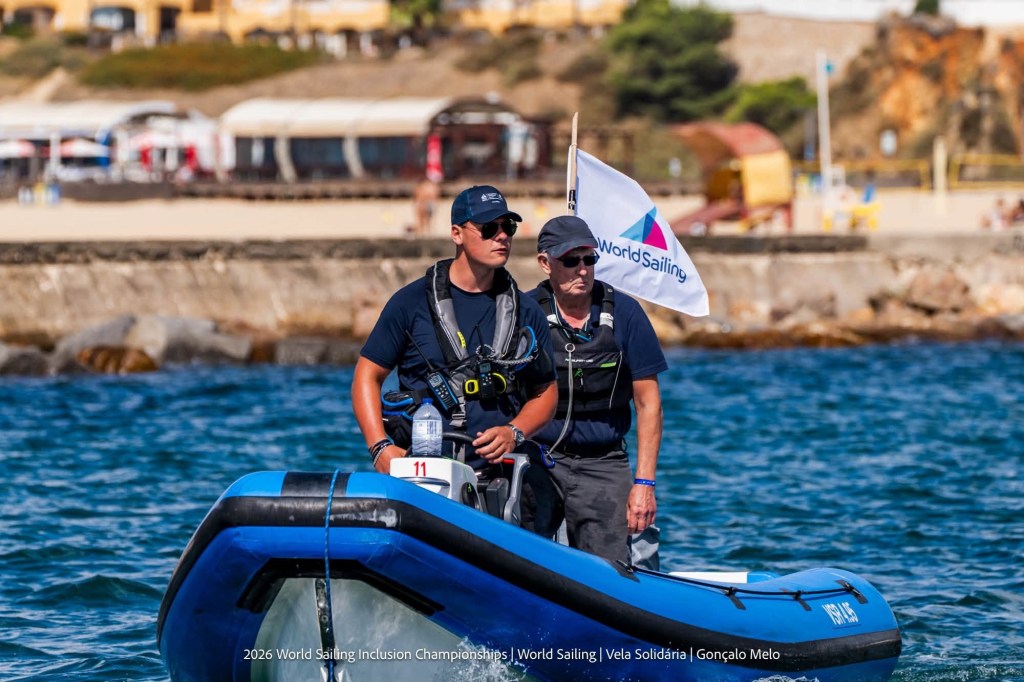
Logan threw himself into everything, supported our Intellectual and Cognitive Impairment sailors, learned an enormous amount and somehow emerged from the experience still willing to speak to us.
His development was remarkable. Although I suspect some of it may have been trauma-based.
Marie, his mum, has questions.
And frankly, I think she’s entitled to them.
But jokes aside, I couldn’t have asked for a better team. They didn’t just turn up, deliver three days of coaching and disappear. They stayed, supported sailors throughout the Championships, helped emerging nations without their own coaches, shared their knowledge and stepped into whatever needed doing.
They brought experience, patience, humour and an extraordinary amount of generosity to the programme. And when things got complicated, as they inevitably do at an international championship, they simply found a way forward.
That’s what makes them special. They understand that development is about people, relationships and opportunities, not just sessions on a timetable.
I am enormously grateful to all five of them.
Would they willingly come back and do it again?
Honestly, I’m not entirely sure.
I suspect some of them may now be screening my calls.
But Team, you were absolutely magnificent. You helped make something very special happen, and I couldn’t have done it without you.
And Logan, if your mum asks, it was a perfectly normal and professionally structured apprenticeship.
The People Behind The Madness
Here’s the thing. I can laugh about all of this now. Mostly.
Because behind every ridiculous moment was someone doing something extraordinary.
Angela keeping the launching system working. Jazz making order out of the wangers’ beach activities. Hannah 2 bringing determination and humour to every challenge. Cath appearing wherever someone needed help. Marie keeping people fed and functioning. Lindsey and Tom telling the stories that deserved to be told. Matt making the technology behave. Taxi coming to the rescue. Kristoff looking after the person who was supposed to be looking after everyone else. Ferran stepping into the adventure. Stoggs and the race management teams delivering racing across the fleets.
And a remarkable collection of volunteers, coaches, officials, sailors and supporters who simply got on with what needed doing.
It wasn’t perfect. No international championship ever is. There were challenges, lessons learned and plenty of things we’ll take forward into future events.
There were also moments when I was exhausted, frustrated and wondering how on earth the days could possibly be getting longer.
But then something wonderful would happen.
A sailor from an emerging nation would cross a finish line. Someone would achieve something they hadn’t thought possible. A new friendship would form. A volunteer would step forward without being asked. Or someone would say something so spectacularly ridiculous over the radio that you simply had to laugh.
And somehow, we kept going.
The Bit Where I Admit I’m Proud
I created the concept for these Championships because I believed Para Inclusive Sailing needed something different. Something bigger. Something that brought people together rather than keeping them in separate corners of the sport. Something that connected development with competition and gave more nations a genuine opportunity to participate.
And in Portimão, I saw that vision come to life.
Forty nations. Hundreds of sailors. New disciplines. Emerging nations. International competition. An extraordinary community working together to create opportunities and demonstrate what inclusive sport can achieve.
Was it exhausting? Completely.
Would I change things? Of course. That’s how we keep improving.
Would I willingly sign up for another fortnight of missing legs, disappearing RIBs, guide dog sitting and radio-based underwear announcements?
Ask me after I’ve had some sleep.
But am I proud?
Unbelievably.
Proud of the sailors, the volunteers, the officials, the coaches and everyone who turned up and got stuck in.
Proud that inclusion wasn’t simply something we talked about, but something people demonstrated every day through practical support, flexibility, kindness and a shared determination to make things work.
And, for once, I’m allowing myself to be a little bit proud of me too.
Because behind all the laughter, the unexpected challenges and the occasionally questionable radio etiquette, we built something rather special.
And if there’s one thing I’ve learned from WSIC 2026, it’s this:
You can plan a World Championship down to the smallest detail. You cannot plan every unexpected moment. But you can surround yourself with people who turn those moments into something extraordinary.
And preferably someone who knows where the spare legs are.


Leave a Reply