The final chapter of my reflections on the 2026 World Sailing Inclusion Championships.
There’s something rather wonderful about watching an idea grow into something that takes on a life of its own.
Especially when that idea started as a slightly ambitious conversation, a collection of scribbles and the belief that perhaps we could do something a little differently.
I’ve been trying to find the right words to finish my reflections on the 2026 World Sailing Inclusion Championships in Portimão. Partly because it’s taken a while to process everything that happened, partly because the world has rather inconveniently continued turning, and partly because I’ve been too busy dealing with the next collection of ambitious ideas to sit down and appreciate the last one.
But I think it’s time to give this one the ending it deserves.
Two hundred and twenty-two athletes. One hundred and fifty-seven boats. Forty nations.
And somewhere amongst those numbers, an extraordinary collection of people who helped turn a rather ambitious idea into something much bigger than I ever imagined.
A few years ago, I had an idea for a different kind of World Championship. One that would bring together sailors with different disabilities and impairment groups, competing across different equipment and formats, creating opportunities that didn’t already exist and putting them together under one World Sailing championship.
The World Sailing Inclusion Championships.
I believed it could work.
Of course, there were questions. Plenty of them. And rightly so. Building something new, particularly something this complicated, requires people to challenge assumptions, understand the risks and work out whether an idea can actually be delivered.
The challenge was finding a way to answer those questions without allowing the questions themselves to become the reason we never tried.
In 2024, we tried to get the first edition off the ground. The venue wanted it. The sailors wanted it. But ultimately there wasn’t enough appetite to support an event that hadn’t yet proved itself.
Which left us with a wonderfully circular problem.
We couldn’t prove it worked until somebody let us do it, and apparently we shouldn’t do it until we’d proved it worked.
Excellent.
There was a fairly fundamental flaw in that logic. Sometimes you have to give something the opportunity to exist before you can demand evidence that it works.
We could have stopped there. It would have been easy to conclude that the concept was too complicated, too ambitious or simply not ready.
I didn’t believe that.
I knew there was something in it. More importantly, I believed the athletes deserved the opportunity to find out. And that’s what has always driven me. Not proving somebody wrong, but challenging the assumption that something cannot be done before we’ve given it a proper chance. I’m not suggesting we should ignore genuine risks or practical constraints. Quite the opposite. Ask the difficult questions. Challenge the idea. Test the numbers. Understand what it will take.
But give us the opportunity to answer those questions.
Because there’s a difference between discovering that something cannot work and deciding that it probably won’t.
What we needed was somebody prepared to stand behind an idea before success made doing so easy.
Oman Sail did.
I should probably start by thanking Joe Rafferty and the team at Oman Sail, who, when presented with a slightly overenthusiastic woman and an idea for a championship that didn’t yet exist, somehow resisted the entirely reasonable temptation to close the door and pretend nobody was home. Instead, they listened. They believed in the concept, backed the athletes and helped make it possible for Oman to bid to host the very first edition. Looking back, I’m not entirely sure whether that was an act of extraordinary vision or a spectacular lapse in judgement, but I’m incredibly grateful either way.
Because there’s something particularly special about the people who believe in an idea before anyone knows exactly what it might become.
And then there’s Dan, who helped me take what was essentially an ambitious collection of ideas, scribbles and probably slightly alarming enthusiasm and turn it into something that could actually work. Having someone who doesn’t immediately reach for the nearest exit when you say, “I’ve had an idea,” is a rare and wonderful thing. Particularly when the idea involves multiple classes, multiple disabilities, an international championship and a logistical operation that would make most event managers quietly resign. Between us, and with the support of some extraordinary people, we began turning an idea into something real.
Then came the considerably less glamorous bit – We had to make the bloody thing work.
And we did.
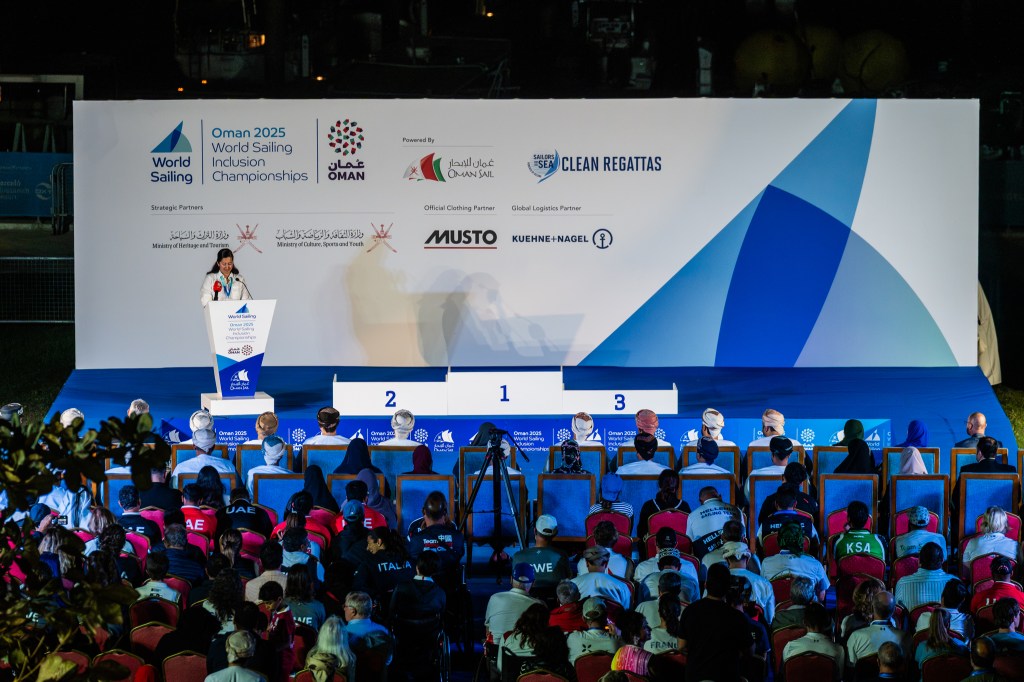
The first championship gave athletes opportunities that hadn’t previously existed within our World Championship structure. Sailors came. Nations came. World Champions were crowned. We learned what worked, discovered what didn’t, changed things and started looking at what could come next.
And then we did something terribly inconvenient.
We made it bigger.
By the time we arrived in Portimão for the 2026 edition, we were bringing together established classes, emerging disciplines, different impairment groups, new formats, development, classification, research and international competition around one championship.
Eight events.
Eight events is, admittedly, a fairly enthusiastic response to the suggestion that something might be too complicated.
I can live with that.
And while the numbers from Portimão are impressive, they don’t begin to tell the story of what actually happened. Because somewhere between the first conversations about whether this could work and the final medals being awarded in Portugal, something rather special developed.
The championship found its own personality.
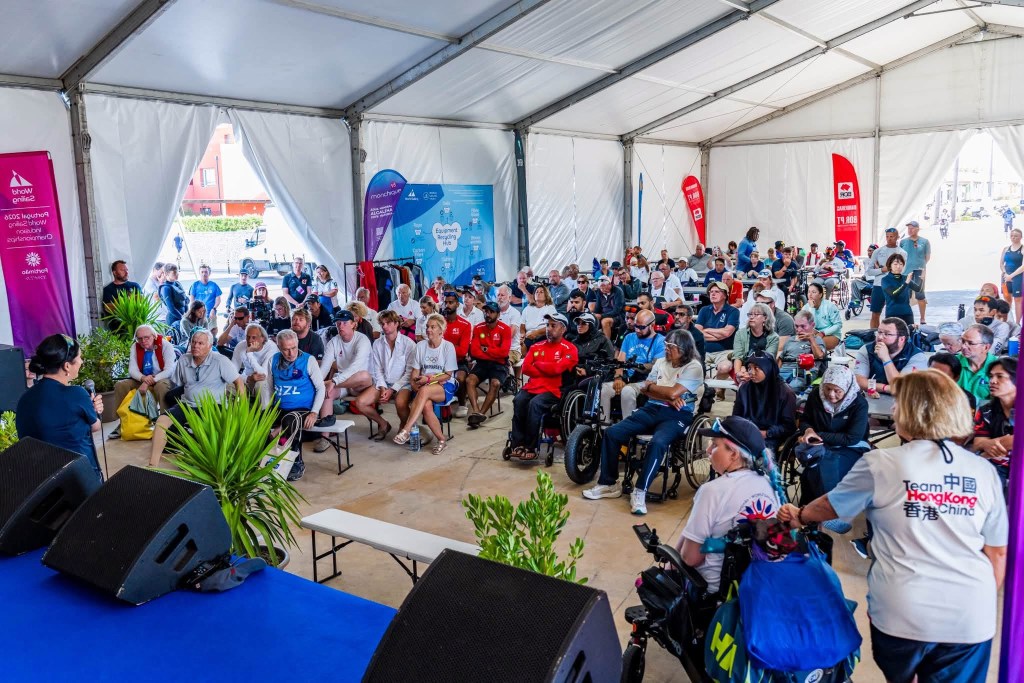
Not a corporate identity. Not a carefully constructed slogan. Not another beautifully formatted PowerPoint presentation explaining the strategic importance of inclusion.
An actual personality.
A spirit.
You could feel it in the boat park, on the pontoons, out on the water and around the venue. Competitors helping each other. Coaches sharing knowledge. Volunteers becoming part of the family. Friendships forming between people who might never otherwise have met. Athletes competing fiercely on the water and then helping one another get back ashore.
People weren’t simply attending an event.
They were becoming part of something.
And that, for me, is where the real value of WSIC sits.
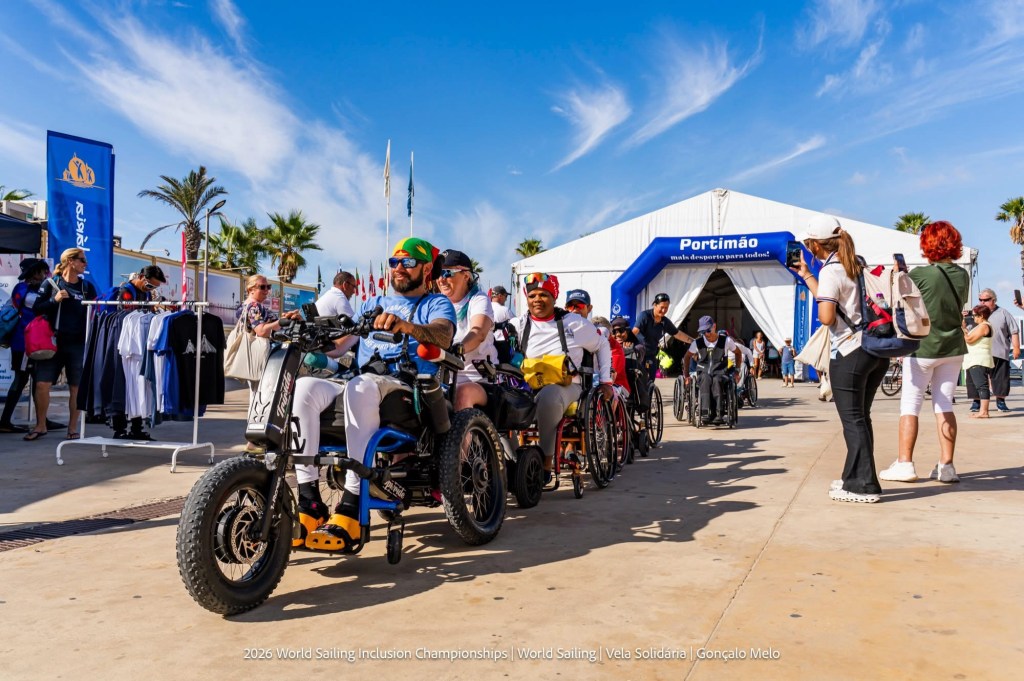
Of course, we can measure entries, nations, boats, classifications and participation. We can produce reports, calculate growth and demonstrate outcomes. There are enough spreadsheets associated with this championship to qualify as an environmental concern. And those measurements matter. They help us understand where we’re succeeding, where the opportunities are growing and where we still have work to do.
But how do you measure belonging?
How do you quantify the confidence somebody gains from competing at their first World Championship? Or the friendships that develop between sailors from completely different countries? Or the impact of an athlete realising that there’s a place for them in international competition?
You can count the people who arrive. It’s much harder to measure what they take home.
One of the things I love most about WSIC is how it brings together different parts of Para sport development. International competition sits alongside opportunities for emerging sailors, education, classification, innovation and the exploration of new equipment and formats.
Athletes at different stages of their sporting journeys can be part of the same environment, learning from one another and seeing where their own ambitions might take them. It’s not simply about creating more events. It’s about creating stronger connections between participation and performance, and building pathways that give athletes opportunities to develop.
And there’s something enormously powerful about seeing that happen in practice.
Then there were people like Hannah2, Marie and Angela, who rather perfectly demonstrated the difference between discussing inclusion and actually delivering it.
While the wider sporting world quite rightly spends time considering development pathways, international representation and the long-term sustainability of sporting opportunities, these three were quite literally getting into the water to help launch Challengers.
Not metaphorically.
Actually in the water.
Because sometimes inclusion isn’t a beautifully worded policy or an ambitious target in a strategy document. Sometimes it’s three women standing in the water, getting thoroughly soaked, making sure somebody gets to go sailing. And I would argue that moments like that are every bit as important to the future of our sport as the strategies and plans that help make them possible.
We need both.
The ambition to create opportunities and the people prepared to roll up their sleeves and deliver them.
I’ve become increasingly convinced that one of the most important things we can do in Para sport is remain curious about what’s possible. Challenge assumptions. Test ideas. Listen to athletes. Understand the practical constraints and then work out what we can do about them.
Equipment? Let’s work on equipment. Scheduling? Let’s work on scheduling. Classification? Let’s work on classification. Money? Let’s look at the numbers.
We can work on problems.
What I struggle to work with is an assumption wearing a lanyard and pretending to be a fact.
“We’ve always done it this way” isn’t evidence.
“That sounds difficult” isn’t evidence.
“We don’t think there will be demand” isn’t evidence either.
Test it.
Give people the opportunity to show you what’s possible.
Portimão was living proof of what happens when people decide to find solutions instead.
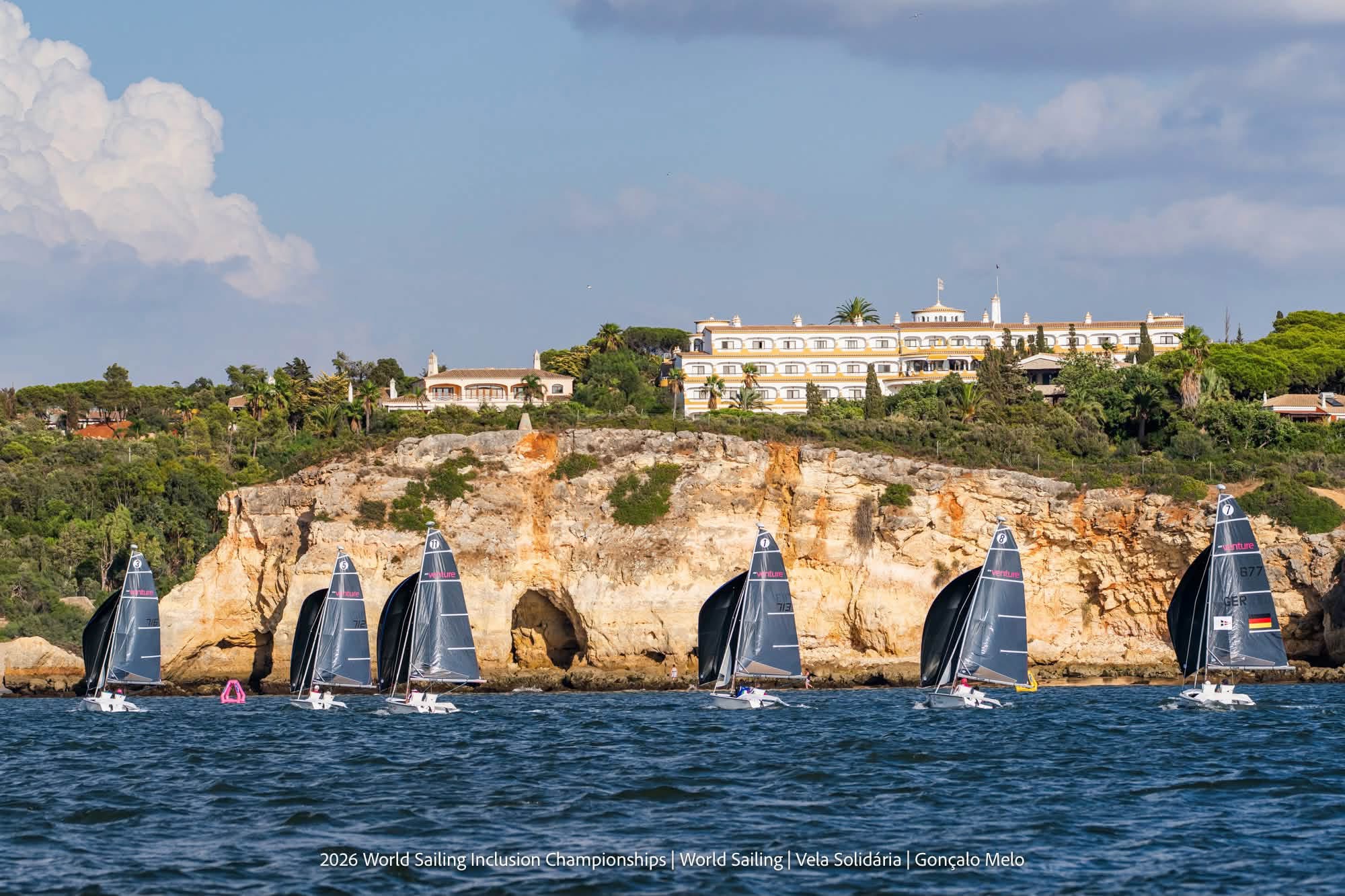
Although I should probably acknowledge that some of those solutions were considerably more inventive than others. Because, of course, the inspirational moments were interspersed with what can only be described as an extended practical examination in crisis management.
There were emails. So many emails.
Emails about boats, emails about accommodation, emails about equipment, emails about emails that had already been sent and, my personal favourite, emails asking for information that was quite literally contained in the email directly beneath them.
At one point I considered setting up an automatic reply that simply said “PLEASE READ THE PREVIOUS EMAIL” but suspected this might not be considered entirely appropriate stakeholder engagement.
Then there was the energy drink situation.
I am reasonably confident that, for at least part of October, I was legally classified as a mobile Red Bull distribution centre. Breakfast was Red Bull. Lunch was whatever I could eat while answering three emails and relocating a boat. Dinner was a distant aspiration, usually replaced by another Red Bull and the increasingly optimistic belief that tomorrow would be quieter.
Tomorrow was never quieter.
For the record, this is not a recommended approach to event management. I would strongly encourage anyone considering it to investigate the exciting alternatives of sleep, proper meals and a reasonable workload. I hear they’re excellent.
At various points, my laptop came dangerously close to being introduced to the Atlantic Ocean.
Not accidentally, either.
I had mentally calculated the trajectory, considered the prevailing wind direction and briefly wondered whether a World Sailing computer would float long enough to constitute a navigational hazard.
Fortunately, the laptop survived.
Mostly because replacing it would have required completing an IT request form, and I simply didn’t have the emotional capacity for another administrative process.
And naturally, no international championship would be complete without the occasional situation determined to test the structural integrity of my last remaining nerve. I can confirm that it survived, although only just, and I’m considering submitting it for independent certification. The warning signs usually began with the words “What happened was…” followed by an increasingly improbable series of events that would somehow conclude with me being expected to find, fix, replace, invent or produce something from thin air that hadn’t existed five minutes earlier.
I briefly considered introducing a new championship honour: the International Order of “Can You Just…” for exceptional achievement in turning a completely unreasonable request into something that apparently requires only five minutes of my time. Judging would be based on the absurdity of the request, the complete absence of any proposed solution and the extraordinary confidence that I could resolve it using three cable ties, my VHF collection, half a can of Red Bull and whatever remained of my will to live. Naturally, the winner would arrive five minutes before the prizegiving to explain that “what happened was…” the trophy had gone missing and could I possibly organise another one?
The boats, meanwhile, were clearly determined not to let the humans monopolise the drama. A select few appeared to have entered the championship under protest, having apparently not been consulted about the expectation that they should actually function. One particular vessel developed such a complicated relationship with reliability that I began researching alternative careers for it. A garden ornament seemed promising, although I suspect even the garden would have lodged a formal complaint. By the end of the week, I was seriously considering establishing a retirement sanctuary for emotionally unstable sailing equipment, somewhere peaceful where the boats could spend their remaining years contemplating their behaviour and never again be asked to perform the unreasonable task of floating in a straight line.
And just when I thought the championship couldn’t become any more surreal, I found myself being transported in the back of a German measurer’s van.
There are moments in life when you stop and wonder how your career choices have brought you to a particular situation. Sitting in the back of a van belonging to a German measurer, somewhere in Portugal, while attempting to deliver an international championship, was certainly one of them. I had once imagined international sports management might involve glamorous travel, important meetings and perhaps the occasional respectable business lunch.
Instead, I was apparently cargo.
I can only assume this was a highly specialised form of event logistics. Possibly the first documented occasion of a championship manager being transported as miscellaneous technical equipment.
But that, in many ways, was the beauty of Portimão.
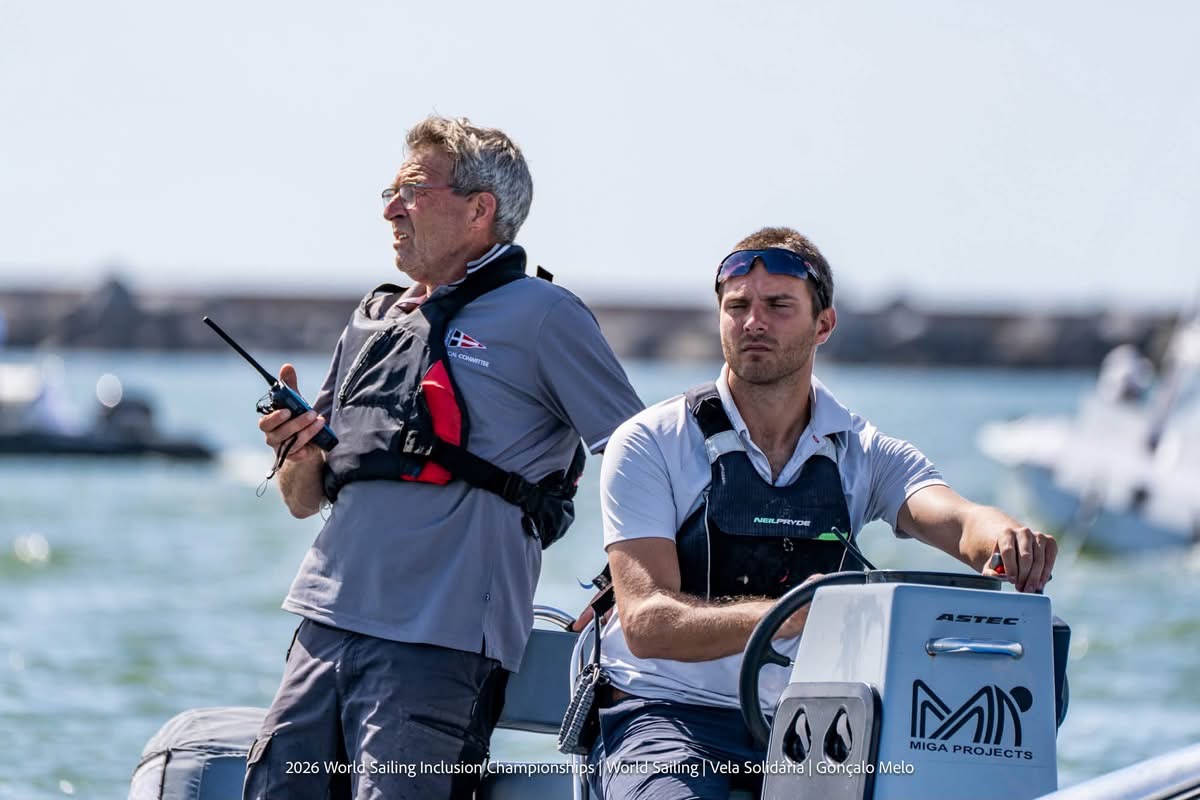
(His was pinched and then returned thankfully)
Whatever needed doing, someone found a way to do it. Often using resources that were never intended for the purpose, frequently with very little notice and occasionally in circumstances that would be difficult to explain to an insurance company.
And despite the chaos, or perhaps occasionally because of it, people kept turning up for each other.
The volunteers who gave their time and energy. The officials who helped navigate complicated situations. The classifiers, coaches, partners and supporters who contributed so much more than their job descriptions required. The local organising team who embraced the challenge of delivering something genuinely ambitious and kept working with us to find solutions.
None of this happens because one person has an idea.
It happens because other people decide that idea is worth making real.
And then there were the athletes.
Always the athletes.
Because when everything else became ridiculous, they were the reminder of why we were doing it.
Every time somebody crossed a finish line, every time a new sailor got onto the water, every time a competitor achieved something they hadn’t previously had the opportunity to attempt, the frustrations became a little less important.
There is something extraordinary about watching athletes compete at the highest level while knowing that the opportunities surrounding them are continuing to grow.
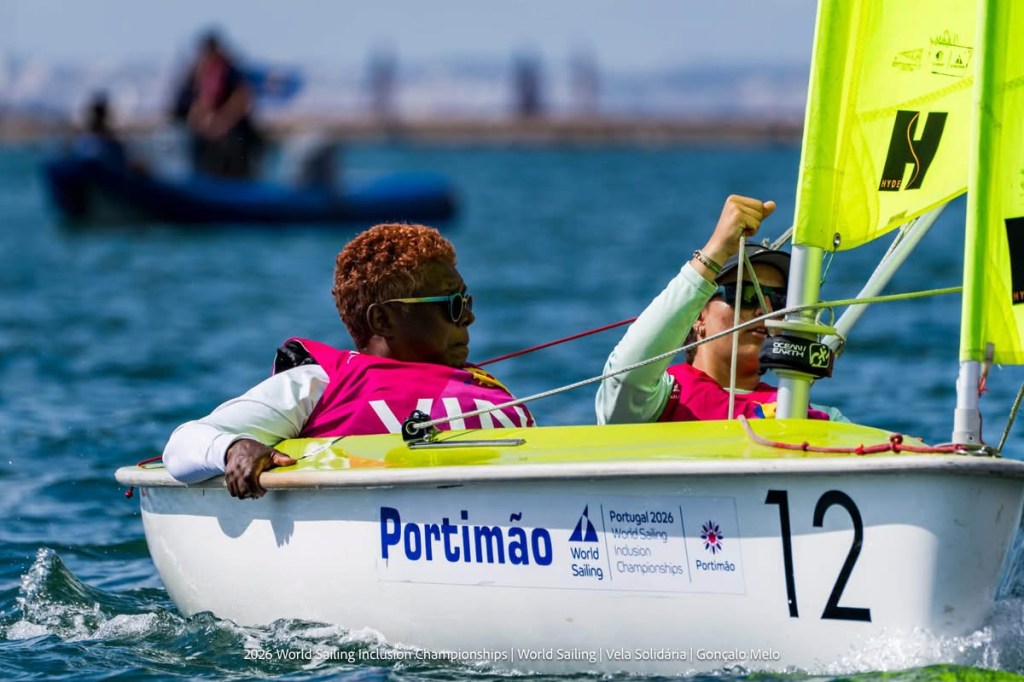
It’s a reminder that sporting excellence and inclusion are not opposing ambitions. They can strengthen one another.
I don’t want to romanticise the exhaustion. Delivering an event of this scale is hard work, and there are things we absolutely need to improve. Sustainable growth requires proper planning, resources, support and a willingness to learn from the bits that didn’t work.
But I also don’t want the difficult moments to overshadow what was achieved.
Because what happened in Portimão was extraordinary.
And something rather interesting has happened since.
We’re not even formally inviting bids for the 2028, 2029 or 2030 editions yet, and we’re already receiving expressions of interest from potential hosts.
Not one.
Several.
I find that rather extraordinary.
A few years ago, we were working to establish the championship and demonstrate what the concept could offer. Now we’re having conversations with people who want to bring it to their own countries and communities.
That’s not just growth.
That’s belief.
It tells me that we’ve created something people see value in, something they want to invest in and something they want to share. Nobody is being forced to take an interest. They’re coming to us because they’ve seen what the championship can be.
And I have to admit, after years of explaining how this could work, it’s rather enjoyable to find myself explaining how others can become part of it instead.
Fantastic.
Get on the bandwagon.
I mean that sincerely. There’s plenty of room.
In fact, I rather hope the bandwagon becomes so crowded over the next few years that we have to build a considerably bigger one.
Because the whole point of creating something like WSIC is that it should continue to grow beyond the people who first imagined it.
And with that growth comes responsibility.
We have something valuable here, and I think we have a responsibility to nurture it.
That means learning from the challenges, supporting future hosts, developing partnerships and making sure the championship remains accessible and sustainable.
It means being ambitious without assuming that enthusiasm alone can solve every problem. It means listening to athletes, using evidence and being prepared to adapt.
And it means remembering why we started.
The objective was never simply to create another regatta.
It was to create an international platform where Para and inclusive sailing could grow, where different athletes and disciplines could come together, where development and competition could support one another and where inclusion wasn’t simply something we talked about.
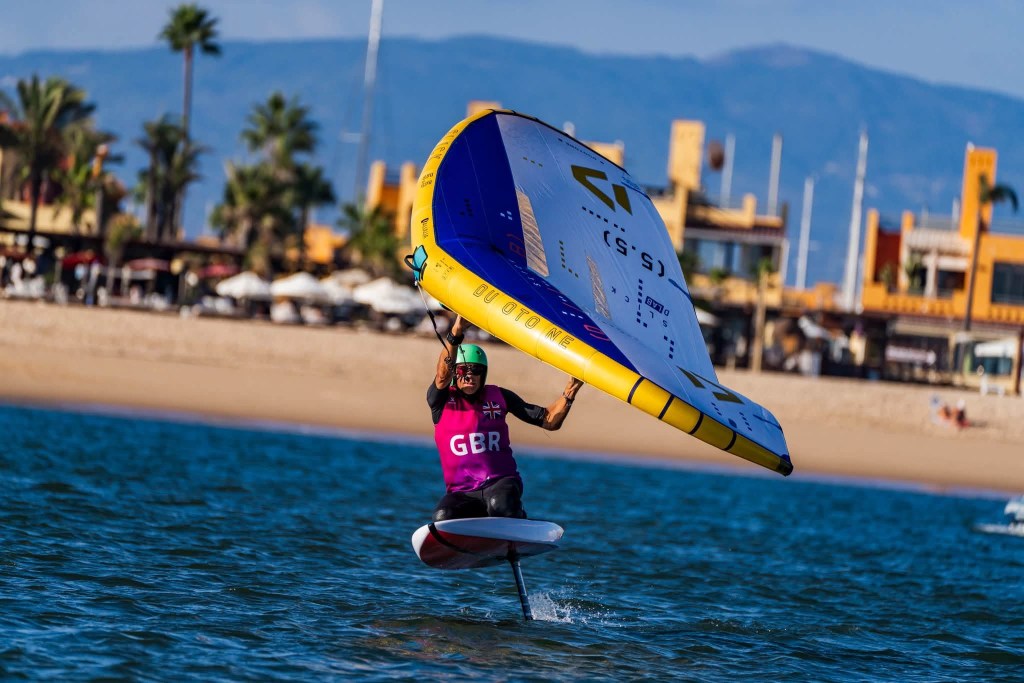
It was something we did.
And the objective was never for WSIC to belong to me.
I wanted to create something big enough and strong enough that eventually it wouldn’t need me. Something that other people would want to own, host, grow and be part of.
That was always the point.
But I do want us to remember how it got here, because I think there’s a lesson in that.
Before an idea becomes established, somebody has to be prepared to believe in its potential. Somebody has to put their credibility behind it, take the first risk and solve the problems nobody ever sees in the photographs. And somebody else has to be brave enough to stand beside them before success makes doing so comfortable. That’s what Joe and Oman Sail did. That’s what Dan helped me do. And that’s what so many people have continued to do as the championship has grown.
I will always be grateful to them. There is a very special kind of satisfaction in seeing an idea develop into something that no longer depends on the person who first imagined it. That’s the beauty of creating something meaningful.
Eventually, it becomes bigger than you.
And I think that’s where we are heading.
I have no idea exactly what WSIC will look like in five years. I hope it will be bigger, stronger, more innovative and more accessible. I hope it will reach athletes and nations we haven’t yet reached. I hope it will continue to challenge our assumptions about what Para and inclusive sailing can be.
And I hope it never loses the spirit that makes it special.
Because I don’t want to build something that looks impressive for a few days and then disappears into a report.
I want to build things that last.
Things that open doors for other people. Things that create opportunities long after the original arguments about whether they were possible have been forgotten.
So yes, I’m proud of what we’ve achieved.
Unashamedly so.
I’m proud that we took an ambitious idea and turned it into something people celebrate. I’m proud that athletes want to come, nations want to participate and hosts want to be involved.
I’m proud that the championship has developed a spirit that no amount of strategic planning could ever manufacture.
I’m proud of the people who believed in it, the people who made it happen and the people who will take it forward.
And I’m proud that, despite the setbacks, the challenges and the occasional spectacular logistical disaster, we kept going.
Because sometimes the most satisfying response to a difficult challenge isn’t another presentation, another meeting or another carefully constructed argument.
It’s building the bloody thing and watching everyone fall in love with it.
And if you’re wondering whether there’s room to be part of what comes next?
Absolutely.
Just try not to stand in the doorway.


Leave a Reply